
CMS EDE partners must meet important compliance changes as deadlines approach. Authorized Exchanges (AEs) need to achieve ARC-AMPE compliance by March 4th, 2026. Direct Enrollment Entities (DEEs) have until June 2026 to meet these standards.
The new requirements bring a fundamental change in security protocols for all cms ede pathway participants. AEs must now implement 402 controls while DEEs need 308 controls. These controls come from NIST Special Publication 800-53 Revision 5. CMS has also added a new security measure. Agents and brokers must now reconnect their CMS Enterprise Portal credentials after 30 minutes without activity. The connection times out if cms ede partners show no relevant FFM activity during this period. Users need to reauthenticate to access the EDE website again.
This piece looks at the detailed privacy and security obligations that cms approved ede partners must handle. You’ll learn about core privacy principles, security control requirements, operational policies, and technical safeguards needed for cms ede ecosystem compliance. The information here will help you understand your obligations and build an effective compliance strategy, whether you’re getting ready for upcoming audits or implementing new security protocols.
Core Privacy Obligations for CMS EDE Partners
EDE partners must follow strict privacy protocols when handling consumer information during enrollment. These protocols are the foundations of trust in the CMS EDE pathway and will give a secure environment for sensitive data at every step.
Data minimization and purpose limitation principles
Privacy requirements for cms ede partners focus on collecting only what’s needed. CMS requires EDE entities to limit access to personally identifiable information (PII) based on specific needs and roles. cms approved ede partners should collect and use the minimum information needed for authorized functions.
The data collected through the cms ede pathway serves only authorized purposes. These include helping consumers apply for coverage, determining eligibility, and enrolling in qualified health plans. Partners cannot collect PII beyond what’s needed without getting specific, informed consent from consumers.
CMS enforces strict rules about information flow through the ecosystem. Partners working in the cms ede environment must document their data connections and exchanges in their Interconnection Security Agreement (ISA). This documentation needs details about arrangements with upstream entities, web-brokers, and downstream agents to show complete transparency in data handling.
User consent and transparency requirements
cms ede partners must get explicit consent before accessing consumer information. This applies to:
- Conducting searches for consumer applications
- Helping consumers apply for Marketplace coverage
- Enrolling consumers in Marketplace qualified health plans
- Checking status or making updates to coverage
Consent records must show the individual’s name, date of consent, and names of agents/brokers receiving authorization. CMS doesn’t require a standard format, but partners must secure these records and keep them for 10 years.
Transparency plays a vital role throughout enrollment. Partners must show a privacy notice statement before collecting any PII. This statement explains what information they collect, why they need it, how they’ll use it, and who they might share it with. Consumers should know their right to file complaints about privacy concerns.
cms approved ede partners must let consumers access, inspect, and correct their PII when asked. This right gives consumers control over their personal information throughout their time with the EDE entity.
HIPAA alignment for personally identifiable information (PII)
cms ede partners must line up their privacy practices with HIPAA principles, especially when handling sensitive health information. The Health Insurance Portability and Accountability Act sets national standards that protect personal health information and defines privacy and security requirements.
Partners must add appropriate safeguards to protect PII’s confidentiality, integrity, and availability. They undergo the largest longitudinal study by independent third-party auditors to verify they meet nearly 300 CMS security and privacy standards before approval.
The HIPAA minimum necessary standard applies to all PII handling in the cms ede ecosystem. Only authorized individuals who complete Marketplace registration, training, and certification can access sensitive information.
CMS watches partners closely to ensure they follow program requirements. They will immediately disconnect any partner that breaks these privacy standards. This oversight ensures cms ede partners maintain strong privacy protections throughout the program.
Security Control Requirements Based on ARC-AMPE
The ARC-AMPE framework sets strong security controls that cms ede partners must implement to protect sensitive consumer data. This framework takes the place of MARS-E v2.2. It introduces 402 controls for Authorized Exchanges (AEs) and 308 controls for Direct Enrollment Entities (DEEs).
Access control and identity verification standards
Authentication and authorization serve as two vital components in the cms ede pathway access control. Users must prove their identity through authentication before gaining system access. Authorization then determines which specific resources they can use.
cms approved ede partners must implement the principle of least privilege. The system should limit access privileges to the minimum level users need to perform their duties. Each user account needs proper documentation that includes access privileges and applicable attributes.
Identity verification plays a central role throughout the process. Agents and brokers need to complete identity proofing on both the EDE Entity’s website and the Exchange. They must then link their CMS Enterprise Portal account to the EDE Entity application with multi-factor authentication. Security protocols require this connection’s renewal every 30 days.
System logging and audit trail requirements
Cms ede partners need systems that automatically generate event logs for administrative actions. The systems must record five significant account lifecycle events:
- Creation
- Enabling
- Modification
- Disabling
- Removal (retirement/termination)
System administrators or managers should receive notifications about these events to maintain accountability. These audit capabilities help detect unauthorized access attempts and suspicious activities due to the data’s sensitive nature.
Encryption protocols for data in transit and at rest
Encryption serves as the life-blood of cms ede security requirements. Federal Information Processing Standard (FIPS) 140-2 compliant encryption algorithms must protect all sensitive information at rest. Data moving between EDE Partners and the FFE requires TLS 1.2 cryptographic protocol with SHA-256 hash.
Cryptographic key management needs special attention because it directly shapes overall security. A Key Management Plan must document the secure storage locations of keys. Cms ede partners cannot use encryption keys that authorized personnel cannot recover, as poor key management could compromise secure systems.
These security control requirements help cms ede pathway partners maintain strong protection for consumer information while keeping enrollment processes efficient.
Operational Policies Required by CMS for EDE Entities
CMS EDE partners must follow specific operational policies about consumer interactions and plan information handling, beyond just technical security controls. These policies create consistent standards for all partners in the ecosystem.
Consumer interaction and plan information accuracy
CMS EDE partners must meet strict user interface standards. Application UIs and critical communications in the Communications Toolkit need Section 508 compliance. This makes enrollment services accessible to all consumers, whatever their abilities.
Identity verification plays a key role in consumer interaction. Consumers using the Consumer pathway must verify their identity before they can access the EDE Environment. They need to create an account with verified information that matches their identity proofing and eligibility application details. Each person can have only one account.
CMS EDE partners must let consumers update their verified identity information. They also need to send post-eligibility communications and give consumers a chance to create their own accounts when Agents/Brokers help them.
Bias-free enrollment facilitation policies
The CMS EDE pathway has strict rules against biased enrollment practices. Partners’ websites must clearly state they are not the Health Insurance Marketplace® website (HealthCare.gov) and might not show all Marketplace plans in the state. This helps consumers understand they’re not on a government website.
All CMS approved EDE partners must handle changes in consumer circumstances and special enrollment periods during and after Open Enrollment. They also need to support families who want to enroll in multiple enrollment groups. These rules make sure all consumers get fair treatment during enrollment.
Data collection rules are crucial for unbiased operations. EDE Entities can only collect data in their approved EDE environment. They cannot gather consumer information on websites not listed in their CMS audit.
CMS EDE pathway operational compliance
CMS EDE partners need extensive documentation for the Annual Agreement and Operational and Oversight Information Collection process, including a corporate relationship chart. Primary EDE Entities must maintain test environments that match their production setup and EDE pathway integration.
Every EDE Entity must use the complete API suite, no matter which application phase they choose. Primary EDE Entities need to implement over 20 required EDE APIs that aid eligibility, enrollment, and post-enrollment experiences.
These operational policies help CMS make sure CMS EDE partners deliver quality service and protect consumer interests during enrollment. Regular reviews check if partners follow these important operational requirements.
Technical Safeguards and Timeout Enforcement
CMS has implemented critical security changes to the cms ede pathway that partners must understand to stay compliant. These changes we focused on session management and authentication to protect sensitive consumer information.
30-minute inactivity timeout enforcement
The most important security update from CMS now enforces a 30-minute inactivity timeout for all cms ede partners. This new requirement replaces the 12-hour integration window with stricter standards. Agents and brokers using an EDE website must connect their FFM account through the CMS Enterprise Portal. A 30-minute inactivity timer starts after this connection. The connection times out automatically if no relevant FFM activity happens during this period, and users need to authenticate again.
Session management and reauthentication protocols
Agents and brokers must reconnect their FFM account credentials to continue their work in the EDE environment. These security controls work among other timeout protections on EDE partner websites. cms approved ede partners must verify that:
- Each agent or broker authenticates again properly
- Users don’t log in on multiple devices at once
- No multiple sessions run with the same credentials
Behind-the-scenes FFM activity tracking
The definition of “activity” needs special attention here. The CMS system tracks activity based on specific actions that connect to the FFM behind the scenes. Users might need to reconnect even while actively using an EDE website. This happens because many EDE platform actions don’t trigger communication with FFM systems.
CMS suggests these steps to minimize workflow disruptions:
- Complete applications and enrollments in one session
- Be ready to sign in again during an EDE session if needed
- Save work often, especially before taking breaks
This timeout requirement lines up with other CMS information systems that need fifteen-minute device locks for federal staff and thirty-minute locks for Windows and UNIX servers.
Preparing for CMS Audits and Maintaining Compliance
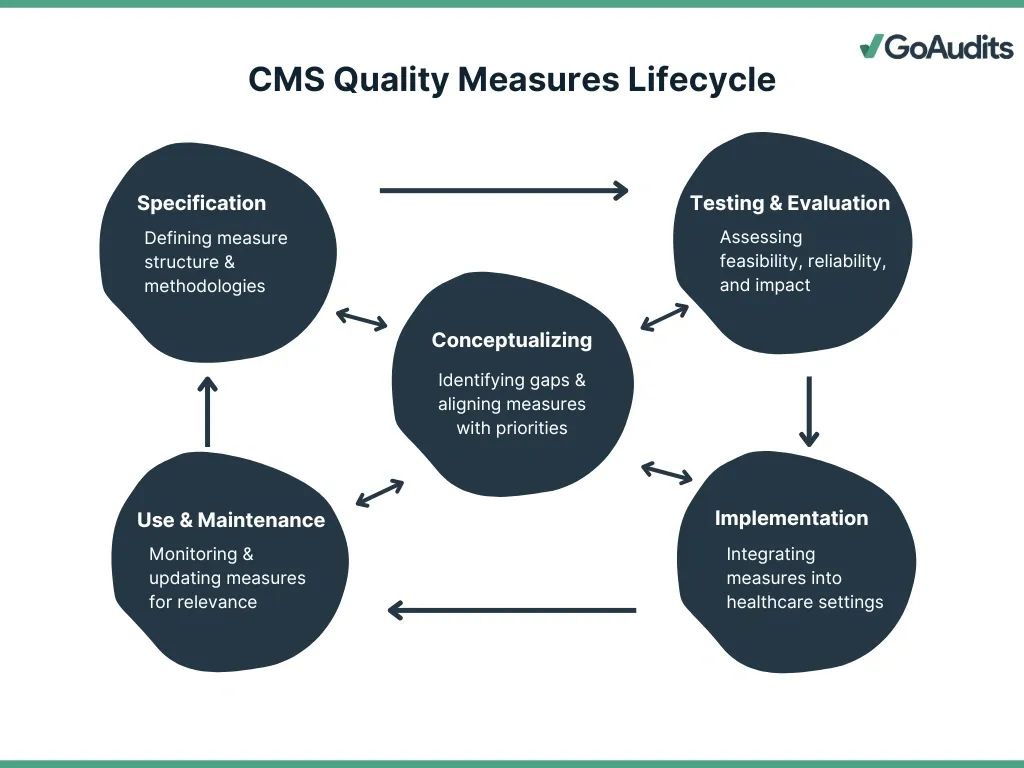
Image Source: GoAudits
You must follow strict documentation and conduct regular audits to comply with CMS EDE requirements. Compliance requires constant attention to changing requirements rather than being a one-time achievement.
Annual ATC/ATO renewal documentation
cms ede partners must update their core documentation and complete assessments each year to keep their Authority to Connect (ATC) or Authority to Operate (ATO). The process has sections about updating the Information System Contingency Plan (ISCP). Partners must conduct tabletop exercises and work on any Plans of Action and Milestones (POA&Ms). The Primary EDE Entity Documentation Package comes first, which contains the EDE Business Agreement and Interconnection Security Agreement (ISA). A review of all privacy policies and Terms of Service follows, submitted through the DE/EDE Entity Program Management Environment.
Independent security audit preparation
Cms approved ede partners must work with independent auditors for business requirements and privacy/security audits. Partners can submit their documentation between April 1st and July 1st each year. The EDE environments should be fully developed and tested with the supplemental EDE Partner Test Case Suite before starting audits. CMS suggests completing development by February so teams have time for any changes. Book a Readiness Call to make sure your audit preparation stays on track.
Using advisory services for SSPP readiness
Third-party experts are a great way to get help with finding compliance gaps and creating remediation plans. These advisors help translate technical findings into business effects and set priorities based on your organization’s risk tolerance. Their expertise helps prepare documentation that meets federal expectations while reducing the workload for your team. On top of that, they provide ongoing guidance as CMS regulations change, which helps you keep up with new requirements.
Conclusion
CMS EDE compliance requires alertness, proper preparation, and attention to detail. ARC-AMPE compliance deadlines are approaching fast – March 2026 for Authorized Exchanges and June 2026 for Direct Enrollment Entities. All participants need to act now. The security standards have increased by a lot with hundreds of mandatory controls from NIST Special Publication 800-53.
CMS requirements pioneer privacy obligations that focus on data minimization, explicit user consent, and HIPAA arrangement. A reliable security infrastructure protects sensitive consumer information through access management, detailed audit logging, and FIPS-compliant encryption protocols.
The CMS EDE framework becomes stronger through operational policies that ensure bias-free enrollment, accurate plan information, and consistent consumer interactions. Partners must quickly adapt to the new 30-minute timeout enforcement – a crucial technical safeguard.
You need proactive preparation to stay compliant during annual audits. System testing and documentation updates should start well before deadlines. We suggest you Book a Readiness Call with compliance experts six months before your audit. This helps spot potential issues early.
Partners who welcome these detailed obligations will build consumer trust and avoid the collateral damage of non-compliance. CMS EDE participation ended up depending on both technical requirements and operational excellence. Today’s investment in proper security and privacy controls forms the foundation for lasting success in healthcare’s evolving marketplace.
Key Takeaways
CMS EDE partners face critical compliance deadlines and must implement comprehensive security measures to protect consumer data while maintaining operational excellence in the healthcare marketplace.
• Compliance deadlines are approaching fast: Authorized Exchanges must achieve ARC-AMPE compliance by March 2026, while Direct Enrollment Entities have until June 2026.
• Privacy obligations require strict data handling: Partners must implement data minimization, obtain explicit user consent, and align with HIPAA principles for all consumer information.
• Security controls are extensive and mandatory: ARC-AMPE framework requires 402 controls for AEs and 308 for DEEs, including FIPS-compliant encryption and comprehensive audit logging.
• 30-minute timeout enforcement is now active: Agents and brokers must reauthenticate their CMS Enterprise Portal credentials after 30 minutes of inactivity to maintain system access.
• Annual audits demand proactive preparation: Partners should begin documentation updates and engage independent auditors at least six months before deadlines to avoid compliance gaps.
The shift from MARS-E v2.2 to ARC-AMPE represents the most significant security upgrade in CMS EDE history. Partners who invest in proper compliance infrastructure today will build consumer trust while avoiding the serious consequences of non-compliance, including immediate disconnection from the CMS system.
FAQs
Q1. What is Enhanced Direct Enrollment (EDE) in the context of CMS? Enhanced Direct Enrollment is a service that allows approved health plan issuers and web-brokers to enroll consumers in Exchange coverage directly from their websites, with or without agent assistance. It streamlines the enrollment process while maintaining strict privacy and security standards.
Q2. What are the key privacy obligations for CMS EDE partners? CMS EDE partners must adhere to data minimization principles, obtain explicit user consent, ensure transparency in data handling, and align their practices with HIPAA standards. They are required to collect only necessary information, use it solely for authorized purposes, and provide mechanisms for consumers to access and correct their personal information.
Q3. What security measures are required for CMS EDE partners? CMS EDE partners must implement robust security controls based on the ARC-AMPE framework. This includes strict access control and identity verification standards, comprehensive system logging and audit trail requirements, and FIPS-compliant encryption protocols for data both in transit and at rest.
Q4. How does the new 30-minute timeout policy affect EDE operations? The new policy requires agents and brokers to reauthenticate their CMS Enterprise Portal credentials after 30 minutes of inactivity when using an EDE website. This replaces the previous 12-hour integration window and aims to enhance security by ensuring that inactive sessions are promptly terminated.
Q5. What steps should CMS EDE partners take to prepare for annual audits? To prepare for annual audits, CMS EDE partners should update core documentation, including the Information System Contingency Plan and Interconnection Security Agreement. They should engage independent auditors for both business requirements and privacy/security audits, and consider using advisory services to identify compliance gaps and develop remediation plans well in advance of audit deadlines.