Organizations are adopting AI faster than they can govern it, and AI governance consulting has become one of the clearest ways to close the gap between deploying models and managing their risk responsibly. As regulations such as the EU AI Act take effect and standards like ISO/IEC 42001 mature, companies of every size are realizing that governing AI is now a board-level concern rather than a technical afterthought. The challenge is knowing what good guidance looks like and how to find a partner that fits both your ambitions and your budget. This guide explains what AI governance consulting covers, what separates a strong consultant, and how the need differs for startups and enterprises, so you can approach AI governance and risk management with confidence.
What AI Governance Consulting Covers
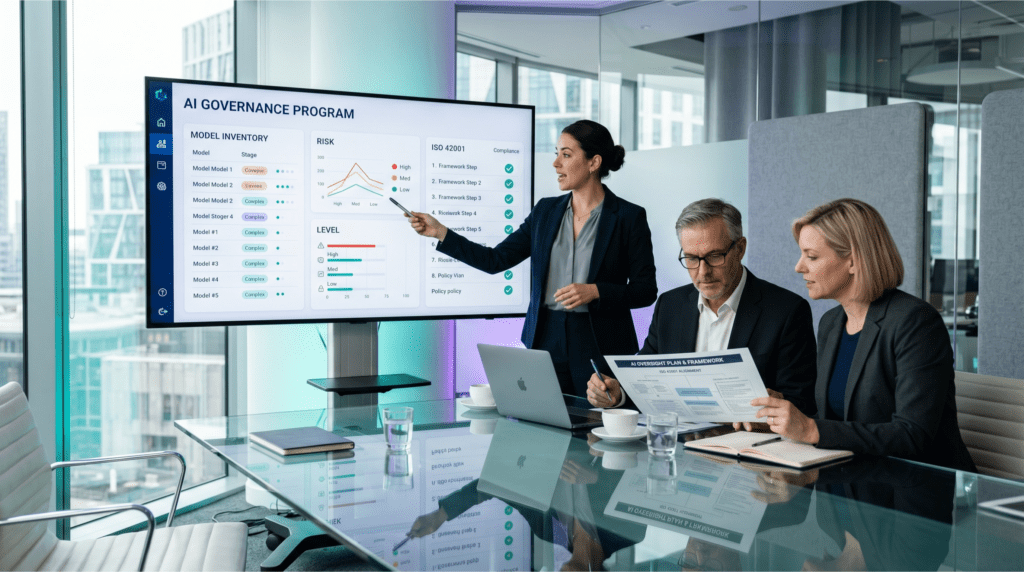
AI governance consulting helps an organization put structure around how it builds, buys, and uses AI. The work is broader than compliance, though compliance is part of it. A strong engagement typically establishes an inventory of AI systems, assesses the risk each one carries, and builds the policies, oversight, and controls that keep those systems accountable over their lifecycle.
Programs, Not Just Policies
The most useful consulting produces an operating program rather than a binder of policies. That means defining who is accountable for AI decisions, how models are reviewed before and after deployment, how data quality and bias are checked, and how issues are escalated. It also means building the guardrails and monitoring that catch problems in production, not just on paper. Pairing a governance program with practical tooling such as AI Guardian is what turns principles into day-to-day practice.
Frameworks and Regulations
Good consultants anchor the program to recognized references. ISO/IEC 42001 provides a management-system approach to AI, much as ISO 27001 does for information security, and the NIST AI Risk Management Framework offers a structured way to identify and treat AI risk. For organizations operating in or selling to Europe, EU AI Act readiness is increasingly non-negotiable, since the regulation phases in obligations based on how risky a given AI use is.
What Separates a Strong AI Governance Consultant
AI governance sits at the intersection of security, privacy, compliance, and data science, so the strongest consultants bring all of those perspectives rather than treating AI as a narrow technical problem. Look for genuine command of ISO/IEC 42001, ideally with lead-auditor-level expertise, and a track record of operationalizing governance rather than only writing strategy. Vendor neutrality matters too: guidance should fit your environment and your models, not steer you toward a single product. A consultant that can connect the governance program to the tooling that enforces it, and explain how the two work together, will deliver far more than one offering a generic policy template.
AI Governance Consulting for Startups and Enterprises
The right engagement looks very different depending on the organization. A startup building an AI product needs a right-sized, foundational program: a clear inventory, a sensible risk approach, the policies customers and investors will ask about, and readiness for the regulations that apply, all scoped to a realistic budget. Spending heavily on enterprise-grade governance too early wastes money a young company does not have. An enterprise, by contrast, is governing many models across business units and needs scale, consistency, board-level oversight, and integration with existing risk functions. In both cases the goal is the same, a program proportionate to the risk, but the design and cost are tailored to the stage. Book a Readiness Call with Elevate’s AI governance team to scope a program that fits your stage and budget.
Conclusion
AI governance consulting is about turning fast, sometimes ad hoc AI adoption into a program that is accountable, defensible, and proportionate to the risk. Choose a partner with cross-domain expertise, real command of ISO/IEC 42001 and the EU AI Act, vendor neutrality, and the ability to connect governance to the tooling that enforces it. Whether you are a startup laying a foundation or an enterprise governing at scale, the program should be sized to your stage. Book a Readiness Call with Elevate to build responsible AI governance that holds up to scrutiny.
Key Takeaways
AI governance consulting helps organizations govern AI responsibly, and the right partner builds an operating program rather than a binder of policies.
It is broader than compliance: Strong consulting inventories AI systems, assesses their risk, and builds the policies, oversight, and controls that keep them accountable across their lifecycle.
Programs beat policies: The most useful engagements define accountability, model review, bias and data checks, and the guardrails and monitoring that catch problems in production.
Frameworks anchor the work: ISO/IEC 42001, the NIST AI Risk Management Framework, and EU AI Act readiness give the program recognized structure and regulatory footing.
Cross-domain expertise matters: AI governance spans security, privacy, compliance, and data science, so look for vendor-neutral partners who can connect governance to the tooling that enforces it.
Size it to the stage: Startups need a right-sized foundation on a realistic budget, while enterprises need scale, consistency, and board-level oversight across many models.
The organizations that govern AI well treat it as a proportionate, ongoing program, not a one-time policy exercise, and they choose a partner who can build and run it with them.
FAQs
Q1. What is AI governance consulting? It is advisory and implementation work that helps an organization put structure around how it builds, buys, and uses AI. A typical engagement inventories AI systems, assesses their risk, and builds the policies, oversight, controls, and monitoring that keep those systems accountable, often anchored to ISO/IEC 42001 and the EU AI Act.
Q2. How is AI governance different from regular IT compliance? AI governance addresses risks that traditional IT compliance does not, such as model bias, data quality, explainability, and the behavior of systems in production. It draws on security, privacy, and compliance, but it adds oversight specific to how AI makes or influences decisions across its lifecycle.
Q3. Can a startup afford AI governance consulting? Yes, when it is scoped correctly. A startup needs a right-sized, foundational program, a clear inventory, a sensible risk approach, the policies customers and investors expect, and readiness for applicable regulations, all matched to a realistic budget. The mistake is buying enterprise-grade governance before the stage calls for it.
Q4. What frameworks should an AI governance program follow? ISO/IEC 42001 provides a management-system approach to AI, the NIST AI Risk Management Framework offers a structured way to identify and treat AI risk, and the EU AI Act sets obligations based on how risky a given AI use is. A strong consultant anchors the program to the references that apply to your business.
Q5. How do I choose an AI governance consultant? Look for cross-domain expertise across security, privacy, compliance, and data science, real command of ISO/IEC 42001 and relevant regulations, vendor neutrality, and a focus on operationalizing governance rather than only writing strategy. The ability to connect the program to the tooling that enforces it is a strong signal of quality.