
The ISO 42001 standard stands as the first global management system built for artificial intelligence. Organizations now have a structured framework to establish trustworthy AI systems. Leaders have rushed to get certified in the last year. They see its strategic value for responsible AI governance.
Teams can now embed AI ethics and risk management right into their core business processes with ISO/IEC 42001:2023. This becomes a great advantage especially when you have AI vendors and suppliers where governance gets tricky. The standard brings remarkable flexibility while keeping things consistent. Your teams can manage AI projects that support both state-of-the-art solutions and accountability for different use cases, industries, and risk levels.
Organizations that implement ISO 42001 build transparent, trustworthy, and ethical AI systems. This becomes a key factor for successful AI adoption in broader digital transformation projects. In this piece, we’ll show you practical ways to apply this standard to vendor governance. You’ll learn to set clear responsibilities, operational controls, and audit processes that make your AI suppliers meet the same high standards you follow internally.
Why ISO 42001 Is Critical for AI Vendor Governance
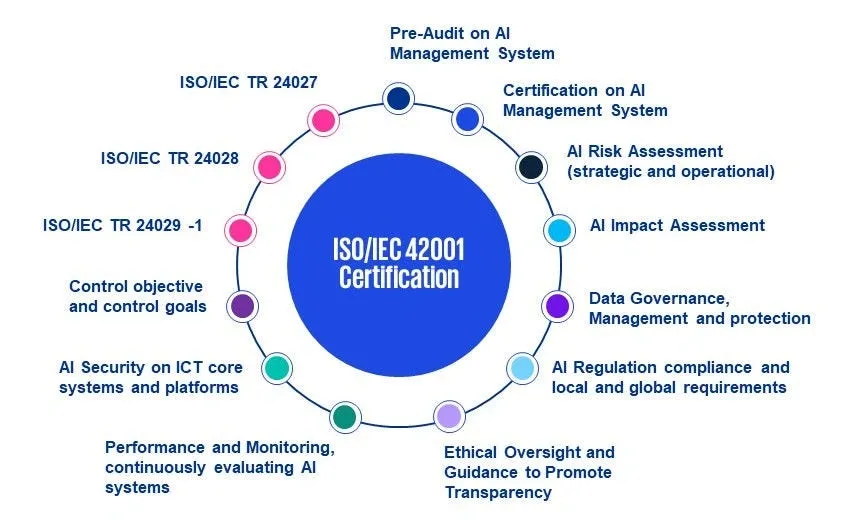
Image Source: KPMG International
Regulatory authorities worldwide are tightening their control over AI systems. Organizations that depend on AI vendors and suppliers now face a complex compliance environment. These changes demand a strong governance framework that can meet new requirements while preserving innovation and competitive edge.
Growing regulatory pressure on AI supply chains
Regulatory oversight continues to reshape the AI world. Organizations will face complete regulatory frameworks that extend deep into AI supply chains by 2025. A recent survey reveals that 38% of respondents see regulatory compliance as their biggest barrier to AI deployment—up 10% from last year. The number of organizations struggling with AI-related risks has grown by 6%, reaching 32%.
The AI supply chain magnifies these concerns. Regulatory bodies now look at every aspect of the AI value chain, from export controls on advanced chips to antitrust investigations into market concentration. Multinational organizations find themselves in a tough spot where following rules in one country might break them in another. The Trump administration’s AI Action Plan shows this challenge. It brought stricter export control enforcement for AI-enabling technologies that could affect vendor relationships between countries.
Third-party AI solutions face closer examination of their development practices, transparency mechanisms, and compliance documentation as AI becomes vital to economic success. ISO 42001 grows more important for vendor management because of this increased oversight.
ISO 42001 as a global measure for AI assurance
ISO 42001 emerges as the world’s first complete AI management system standard. It gives organizations a well-laid-out path to show responsible AI adoption. The standard focuses on creating sound governance across an organization’s AI footprint instead of specific AI applications. Organizations can bridge the gap between high-level policy goals and practical governance implementation this way.
The standard takes a systematic approach to AI management. It expands traditional third-party risk management by adding controls for externally managed AI systems in vendor governance. Vendors must undergo AI governance evaluation during onboarding. Their AI models need monitoring, and their subcontractors’ AI use requires assessment.
Executive claims about AI governance frameworks sound impressive at 87%, but only 25% have put these frameworks to work across their business. ISO 42001 certification proves that governance structures work beyond paper. Microsoft and Google have already earned ISO 42001 certification, hinting they might ask their suppliers to do the same.
Trust and transparency as procurement differentiators
AI transforms from a “black box” into a strategic partner when procurement teams understand it better. Trust grows when stakeholders see how AI decisions match organizational policies and values. Research shows that sharing AI information without context can damage trust by raising doubts about legitimacy.
ISO 42001 solves this challenge with frameworks for meaningful transparency. The standard encourages organizations to show their AI systems work with proper governance, oversight, and ethical controls rather than just saying AI exists. Transparency becomes a strategic tool that builds trust, not just a box to check.
Vendors gain competitive advantages with ISO 42001 certification. They can:
- Skip lengthy security assessments by showing proactive governance
- Build customer confidence through external audits
- Stand out in contract competitions and vendor risk assessments
- Meet vendor requirements from large enterprises like Microsoft
ISO 42001 certification will likely become essential as more organizations ask suppliers to verify AI governance. This follows the same path as ISO 27001 for information security.
Defining Vendor Roles and Responsibilities Under ISO 42001
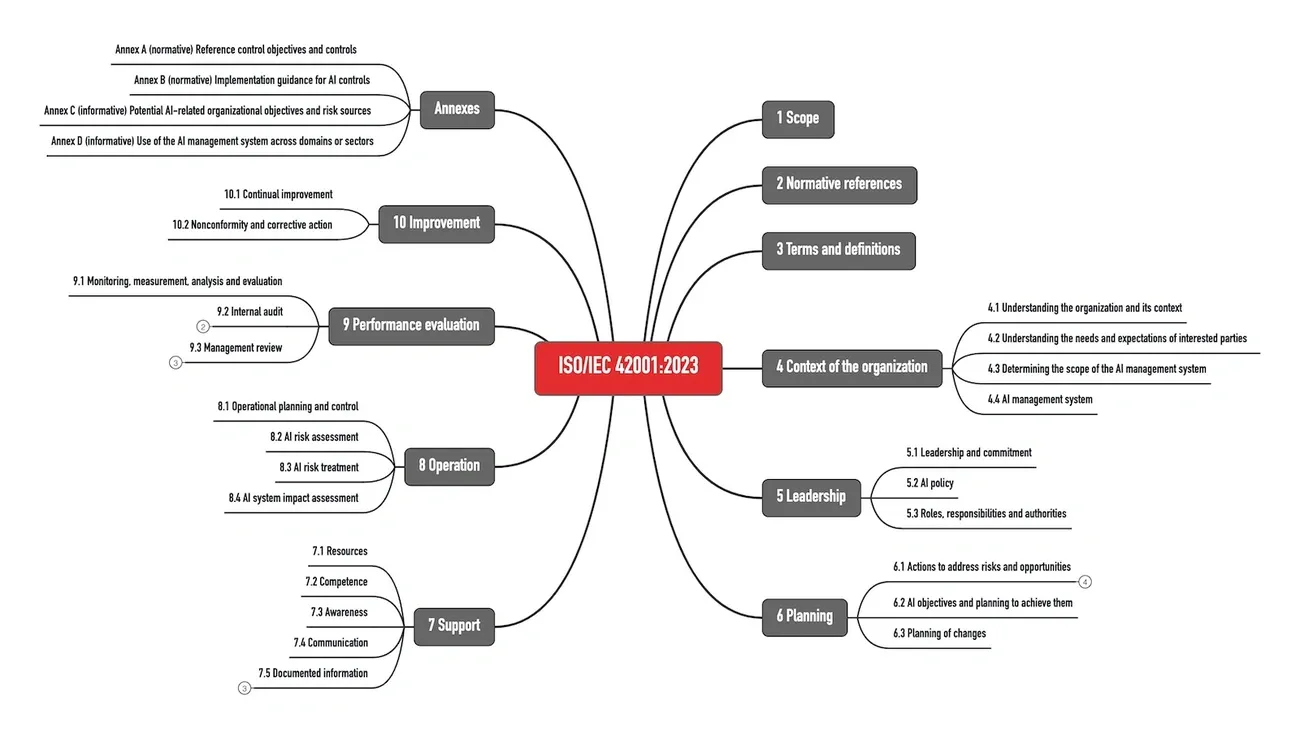
Image Source: Johner Institute
ISO 42001 standard needs a clear understanding of responsibilities in your AI supply chain. The standard gives a well-laid-out way to define, document, and manage these roles throughout the AI system lifecycle.
Role-based control mapping: developer vs provider vs user
Role definitions are the foundations of good AI governance under ISO 42001. The standard recognizes three main organizational roles that shape which controls apply to your vendor relationships:
- AI Producer: Organizations that design, develop, test, and deploy AI systems. Model creators, implementers, and verification specialists who build AI capabilities belong to this category.
- AI Provider: Entities that deliver AI products or services. Platform providers offer tools to build AI, while product/service providers deliver ready-to-use AI solutions.
- AI User: Organizations that use AI products or services directly or through provision to their own users.
Organizations often take on multiple roles. They might develop AI in-house as a Producer while integrating it into customer-facing services as a Provider. Your position in the AI value chain determines ISO 42001 requirements, so early role identification matters.
Clarifying shared vs exclusive responsibilities
ISO 42001 creates a linked chain of custody from start to finish. Each stage has clear accountability. This prevents problems where nobody owns AI risks until something goes wrong.
AI Producers stay accountable for their components’ quality and behavior. Providers take primary responsibility for system performance, ethics, and compliance. This setup works like in cloud service arrangements.
Let’s say you implement ChatGPT. Your organization becomes OpenAI’s Customer while acting as an AI Provider to your clients. The standard’s Annex A.3.2 requires specific people to handle:
- Development (code writers, reviewers, data managers)
- Validation (bias testers, ethical reviewers)
- Deployment (configuration and access control)
- Monitoring (drift detection, performance tracking)
- Incident response (technical forensics, notifications)
- Decommissioning (safe erasure, audit preservation)
Documenting vendor roles in the AIMS scope
ISO 42001’s clause 4.1 requires role determination that shapes your entire AI Management System (AIMS) scope. You should start with a complete inventory of all AI systems, both in-house and vendor-purchased.
This inventory helps define your AIMS scope and identifies covered AI activities, applications, and business units. Each system needs documentation of:
- Stakeholders’ participation in the AI lifecycle and their roles
- Vendor responsibilities regarding data and models
- Responsibility alignment with controls in Annex sections A6 and A8
Documentation supports key governance functions. Teams can communicate AI policies and accountability structures clearly. Clear workflows and escalation paths emerge when issues occur. Auditors get essential evidence during ISO 42001 audits to assess risk management, ethical AI principles, and overall governance.
A well-documented AIMS scope creates transparency between organizations. It builds a strong foundation for third-party risk management that aligns with ISO 42001.
Operationalizing ISO 42001 Controls for AI Suppliers
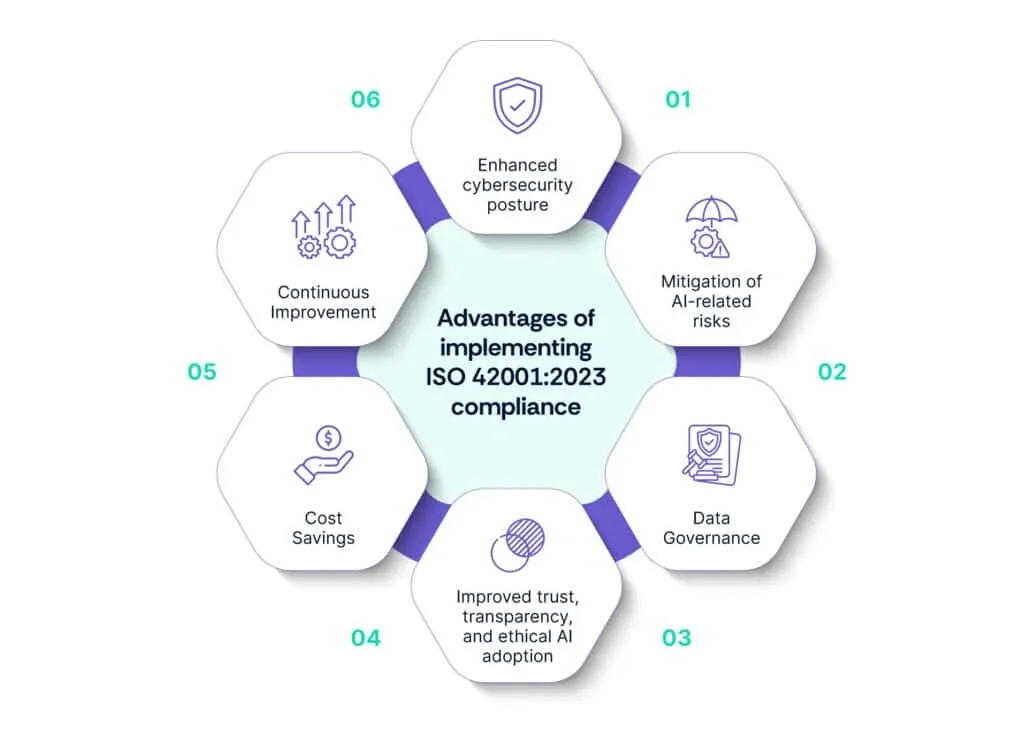
Image Source: Scrut
Your AI supply chain needs systematic implementation to turn ISO 42001 principles into practical vendor controls. Organizations must set up concrete ways to check if suppliers follow the standard’s requirements, going beyond theoretical frameworks.
Embedding governance into procurement workflows
Today’s procurement teams don’t just take empty promises about AI governance. They need real proof of compliance when selecting vendors. A missing document isn’t a small mistake – it can disqualify a vendor.
You need these elements in your procurement workflows to make ISO 42001 work for suppliers:
- Board-approved AI policies with formal signatures and documented review cycles
- Live, auditable AI risk registers with specific people responsible for each risk
- Supplier contracts with embedded flowdown clauses that push governance through every vendor level
- Versioned documentation that shows active upkeep of policies and controls
The best way to implement this combines high-level governance with practical technical blueprints like risk tiers, automated checks, and standard assessment criteria. Setting up consistent vendor evaluation during onboarding helps spot and reduce AI-specific risks before they show up in production.
Using model cards and MLOps pipelines for compliance
Strong Machine Learning Operations (MLOps) practices serve as the foundation to implement ISO 42001. The main parts include:
- Model cards: These standard documents work like “nutrition labels” for AI models. They show the purpose, performance metrics, limits, and ethical aspects. Amazon SageMaker Model Cards help keep things transparent and accountable by recording model behavior and usage rules.
- MLOps pipelines: Machine learning pipelines need the same careful handling as production code to show controls work. Version control, rollback options, and constant monitoring prove AI systems stay accurate, stable, and true to their goals.
Your MLOps should match ISO 42001 requirements through automated evidence collection every 24 hours or when changes happen. This includes configurations, logs, approvals, training data, evaluation metrics, and vendor statements. Such automation creates a constant audit trail that proves ongoing compliance.
Book a Readiness Call with AI governance specialists to learn about your current MLOps practices against ISO 42001 requirements and find ways to improve.
Vendor-specific Annex A controls: A.5, A.6, A.10
Annex A of ISO 42001 has three sections that shape vendor management:
A.5 (Assessing Impacts of AI Systems) needs structured processes to evaluate how AI systems might affect people and society. Vendors must document their AI offerings’ intended use, possible misuse, positive/negative effects, and risk reduction measures.
A.6 (AI System Life Cycle) sets controls for development, deployment, operation, and monitoring. Vendors should include verification and validation steps that check systems against set standards for performance, safety, and reliability.
A.10 (Third-Party & Customer Relationships) tackles supplier governance directly and requires:
- Clear documentation of everyone involved in the AI system lifecycle with their roles
- Steps to assess, evaluate, select, and watch suppliers
- Contracts that spell out AI-specific duties
Control A.10.3 focuses on AI supplier management. It builds on ISO 27001 supplier controls but adds AI-specific concerns like fairness, explainability, and ethical use.
A systematic approach to these controls creates a governance framework that holds AI suppliers to the same high standards as internal teams.
Third-Party Risk Management Aligned with ISO 42001
Managing AI vendors needs a complete approach that goes way beyond the reach and influence of traditional supplier assessment methods. The ISO 42001 standard expands third-party risk management by introducing specialized controls for AI systems provided by vendors, suppliers, and partners. Organizations must assess not only data security and contractual compliance but also deal with risks related to fairness, explainability, model updates, and ethical use.
Assessing AI vendors during onboarding
Strong vendor governance starts with a complete evaluation during the onboarding process. Organizations must define their AI scope by distinguishing between internal AI use and AI embedded in customer-facing tools. They should use Statements of Applicability (SOAs) to document in-scope systems and applicable controls.
ISO 42001 requires organizations to implement specific onboarding practices for AI vendors:
- Assessing a supplier’s AI governance structures during first evaluation
- Looking at data quality, privacy protocols, and lineage for vendor AI systems
- Requesting evidence of transparency, explainability, and ethical controls
- Analyzing fourth-party (subcontractor) AI use and associated risks
Organizations should maintain documentation of all stakeholders involved in the AI system lifecycle with their defined roles and responsibilities. This documentation provides essential evidence during ISO 42001 audits, as auditors will specifically check these roles to see how well they manage risks.
AI-specific risk criteria and tiering models
Traditional vendor risk assessment methods don’t deal very well with the unique challenges of AI systems. ISO 42001 emphasizes a risk-based approach that helps organizations embed AI-specific risk management throughout the AI lifecycle. This approach recognizes AI risks as continuous rather than one-time events, systemic instead of siloed, and multi-stakeholder in nature rather than purely IT-driven.
A standardized assessment across vendors using AI creates consistency in evaluation. Organizations should update supplier tiering models quarterly to reflect changes in AI adoption and exposure. High-risk AI vendors will receive appropriate levels of oversight based on factors such as:
- Data sensitivity handled by the AI system
- Potential effects on individuals or communities
- Model transparency and explainability capabilities
- Bias mitigation and fairness controls
- Operational resilience and backup mechanisms
Organizations must apply these criteria consistently through structured assessment protocols that line up with Clause 6 of ISO 42001, which requires risk-based approaches to AI management.
Supplier code of conduct aligned with ISO AI standards
A dedicated AI supplier code of conduct plays a vital role in ISO 42001 compliance. This code sets clear expectations for ethical AI development and use among vendors. OpenAI’s Supplier Code serves as a notable example that emphasizes legal compliance, ethical conduct, labor rights, health and safety, and environmental responsibility.
The code should require suppliers to operate in full compliance with applicable laws, regulations, and standards in their jurisdictions. It should outline expectations for ethical business practices including fair dealings, anti-corruption measures, transparency, conflict of interest management, and data integrity.
Contract provisions must address AI-specific concerns like incident response scenarios, data handling practices, model updates, and breach notification SLAs. Organizations should include clauses that require suppliers to cooperate fully with regulatory authorities and audits by providing all necessary information.
Organizations that implement these structured third-party risk management practices aligned with ISO 42001 build a governance framework. This framework ensures AI suppliers meet the same rigorous standards applied to internal systems while creating a foundation for trust across the AI supply chain.
Audit Preparation and Documentation for Vendor Oversight
Documentation builds the foundations of successful ISO 42001 audits, particularly with vendor-provided AI systems. Good audit preparation needs proper record-keeping that shows ongoing compliance instead of rushing to create documents at the last minute.
Pre-audit checklist for AI supplier controls
Organizations need to check if their vendor oversight systems work properly before scheduling an external ISO 42001 audit. A complete pre-audit checklist must have:
- Defined AIMS scope that clearly shows which third-party AI systems need governance
- Completed supplier assessments with proof of careful evaluation during onboarding
- Updated AI risk register listing vendor-specific entries with assigned owners
- Statement of Applicability (SoA) that connects relevant Annex A controls to each vendor
- Management review records proving executive oversight of vendor AI systems
Good preparation shows auditors your organization maintains steady control rather than rushing before audits. Companies with mature governance usually cut their audit prep time from eight weeks to just two weeks because they collect evidence regularly.
Evidence requirements for vendor-provided AI systems
Auditors want solid proof that governance works when they look at vendor-provided AI systems. Your key evidence should include:
First, model documentation with model cards that spell out purpose, limitations, and ethical considerations for each vendor AI system. Second, data governance records that prove proper handling of training datasets with the right privacy controls. Third, contract documentation that includes clear AI governance requirements and flowdown clauses.
Your organization must keep event logs that track all the most important AI system activities. ISO 42001’s A.6.2.8 control needs tamper-proof logging practices to record model updates, performance metrics, and incident responses.
Corrective action tracking and nonconformity logs
ISO 42001 Clause 10 requires processes to identify problems, fix them, and adapt governance as new risks emerge. Your organization needs a formal corrective and preventive action (CAPA) process that:
- Groups findings by how severe and risky they are
- Gives tasks to responsible owners with clear deadlines
- Makes sure identified issues get fixed
- Takes bigger problems to management
The corrective action log provides crucial evidence during audits. It proves your organization actively finds, tracks, and fixes governance gaps. Auditors spot mature organizations by looking at how they improve—not by how much paperwork they have.
Strategic Benefits of ISO 42001 in Vendor Governance
ISO 42001 does more than meet compliance needs. It changes vendor governance from a cost center into a business advantage. Companies that use this framework get ahead of competitors and build green AI practices.
Reducing legal exposure under state and global AI laws
ISO 42001 helps companies create a single governance structure that lines up with many regulatory frameworks at once. Companies can maintain one system that works across markets instead of creating different processes for each region. This approach works great especially when you have AI regulations growing worldwide.
The standard’s risk assessment method helps companies spot potential legal risks early. Detailed records of AI supplier practices provide crucial proof during regulatory checks or legal cases. The standard ended up changing your approach from just following rules to building stronger systems.
Accelerating sales cycles with verifiable AI controls
ISO 42001 certification improves vendor selection by a lot. About 72% of enterprise buyers now check for ISO 42001 before starting the first RFP round. This early approval speeds up sales cycles, creates competitive advantages, and boosts deal values.
Vendors with certification skip the hassle of custom forms and special risk reviews that slow down procurement. Book a Readiness Call to learn how ISO 42001 certification helps your company show verifiable AI controls that procurement teams want.
Positioning for CSA STAR for AI Level 2
The Cloud Security Alliance (CSA) created a certification framework just for AI governance. CSA STAR for AI Level 2 needs a detailed third-party audit of a company’s AI security, governance, and risk controls.
ISO 42001 certification helps companies get CSA STAR for AI Level 2 certification with little extra work. These two certifications show clear proof that your AI governance meets industry standards.
Companies that get these certifications first see real benefits. Customer evaluations become easier. AI deployments gain more trust. Regulatory compliance gets simpler. These standards are the foundations for AI that’s secure, compliant, transparent and trustworthy.
Conclusion
ISO 42001 is a game-changing framework that helps organizations manage their AI vendors better. This piece shows how this trailblazing standard brings order to the complex world of AI supplier management.
Companies that use ISO 42001 get many more benefits than just following rules. The standard offers a well-laid-out way to define roles across the AI supply chain. It creates clear accountability between producers, providers, and users. On top of that, it helps assess risks specific to AI that regular vendor management might miss.
Real governance happens when companies put these controls into action through procurement, model cards, and MLOps pipelines. This creates solid proof of compliance instead of just writing down ideal policies. Such evidence proves valuable during external audits and shows ongoing compliance rather than last-minute preparations.
The benefits go way beyond checking regulatory boxes. Companies using ISO 42001 face less legal risk across countries. They also close sales faster with their verified controls. Early adopters set themselves up nicely to get more certifications like CSA STAR for AI.
Growing regulatory oversight of AI systems shows why vendor governance needs immediate attention. ISO 42001 shows a practical way forward. Companies can welcome new ideas while making sure their AI suppliers meet high standards for ethics, transparency, and risk management.
AI keeps changing how businesses work. ISO 42001 certification will likely change from a competitive edge to a must-have – just like information security standards did before. Companies that arrange their vendor governance with this framework now will build stronger foundations for responsible AI use tomorrow.
Key Takeaways
ISO 42001 transforms AI vendor governance from reactive compliance to strategic advantage, providing organizations with a structured framework to manage AI suppliers while reducing legal exposure and accelerating business growth.
• Define clear vendor roles early: Map AI suppliers as producers, providers, or users to establish accountability chains and prevent diffused responsibility across your AI supply chain.
• Embed governance into procurement workflows: Require verifiable evidence like board-approved AI policies, live risk registers, and model cards rather than accepting empty compliance promises.
• Implement AI-specific risk assessment criteria: Evaluate vendors on fairness, explainability, bias mitigation, and ethical controls—not just traditional security and contractual compliance.
• Maintain continuous audit readiness: Collect automated evidence daily including configurations, logs, and vendor attestations to demonstrate ongoing compliance rather than scrambling before audits.
• Leverage certification for competitive advantage: ISO 42001 certification eliminates custom questionnaires, accelerates sales cycles, and positions organizations for advanced certifications like CSA STAR for AI Level 2.
Organizations implementing ISO 42001 for vendor governance create a unified approach that satisfies multiple regulatory frameworks while building trust across their AI supply chain. As regulatory scrutiny intensifies globally, this standard will likely transition from competitive differentiator to market necessity—making early adoption a strategic imperative for AI-dependent businesses.
FAQs
Q1. What is ISO 42001 and why is it important for AI vendor governance? ISO 42001 is the first global management system standard specifically designed for artificial intelligence. It’s crucial for AI vendor governance as it provides a structured framework for establishing trustworthy AI systems, helping organizations manage AI risks and ensure ethical practices across their supply chain.
Q2. How does ISO 42001 help in defining vendor roles and responsibilities? ISO 42001 establishes a clear structure for defining roles such as AI Producer, Provider, and User. This helps organizations clarify shared and exclusive responsibilities, document vendor roles in the AI Management System (AIMS) scope, and create transparency across organizational boundaries.
Q3. What are some key steps in operationalizing ISO 42001 controls for AI suppliers? Key steps include embedding governance into procurement workflows, using model cards and MLOps pipelines for compliance, and implementing vendor-specific Annex A controls. This involves creating board-approved AI policies, maintaining live AI risk registers, and establishing automated evidence collection processes.
Q4. How does ISO 42001 impact third-party risk management for AI vendors? ISO 42001 extends traditional third-party risk management by introducing specialized controls for AI systems. It requires comprehensive evaluation during vendor onboarding, implementation of AI-specific risk criteria and tiering models, and the development of a supplier code of conduct aligned with ISO AI standards.
Q5. What strategic benefits does ISO 42001 offer in vendor governance? ISO 42001 provides strategic advantages such as reducing legal exposure under various AI laws, accelerating sales cycles with verifiable AI controls, and positioning organizations for advanced certifications like CSA STAR for AI Level 2. It helps build a unified governance structure that aligns with multiple regulatory frameworks simultaneously.