
Cloud-based attacks now account for 82% of all security breaches. This alarming trend makes AI governance and ethics top priorities. Yet only 29% of organizations have detailed AI governance plans, which leaves them vulnerable to major risks.
The regulatory world has changed. A resilient AI governance framework is now mandatory for businesses. The EU AI Act of 2024 stands as the world’s most detailed artificial intelligence governance law. Organizations face steep penalties – up to €35 million or 7% of total global turnover. Legal, compliance, and audit leaders rank technology as their primary risk concern, above economic factors and tariffs. Organizations must develop strong AI governance principles and clear policies to discover the full potential of AI while reducing its risks.
Poor responsible AI governance can backfire badly. The Dutch government learned this lesson when the District Court of The Hague struck down their System Risk Indication (SyRI) for human rights violations. But 68% of executives still think generative AI’s benefits outweigh its risks. This makes proper controls and review mechanisms crucial.
This piece will guide you through the key elements of effective AI governance. We’ll cover everything from ethical foundations to practical controls and approval processes that safeguard your organization while supporting innovation.
Why AI Governance and Ethics Are Business-Critical
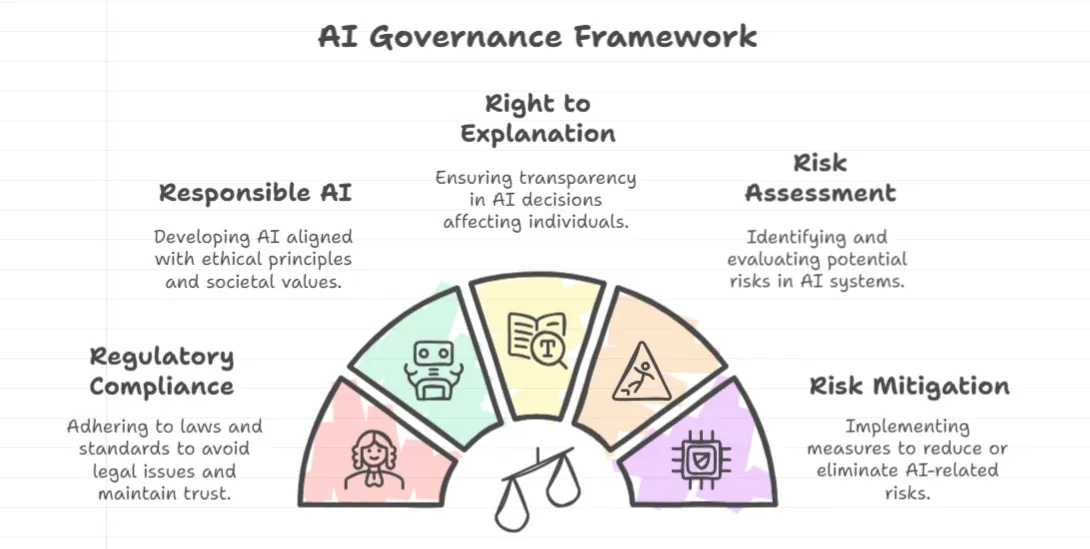
Image Source: Medium
“We’re seeing a kind of Wild West situation with AI and regulation right now. The scale at which businesses are adopting AI technologies isn’t matched by clear guidelines to regulate algorithms and help researchers avoid the pitfalls of bias in datasets.” — Timnit Gebru, Founder of The Distributed AI Research Institute, AI ethics pioneer
AI adoption is booming – 70 percent of organizations use it without proper governance structures. The scary part? Most don’t see this gap as a major risk. This dangerous mix of quick adoption without oversight puts businesses at risk on many fronts. Setting up proper ai governance and ethics isn’t just about tech anymore – we need it to run our businesses.
Reputational risks from ungoverned AI
Bad AI can wreck a company’s image and destroy stakeholder trust in minutes. The Global Situation Room’s Reputation Risk Index now calls AI misuse the biggest threat to organizations. This damage hits more than just PR – it costs real money:
- Loss of revenue: Customers jump ship to competitors they see as safer or more ethical, hitting both immediate and future income
- Rising acquisition costs: Lost trust means spending more to get new customers through big discounts or expensive PR fixes
- Market valuation impact: Stock prices usually take a hit after AI-related problems come to light
- Talent attrition: Top performers and business partners often walk away from companies with questionable AI practices
Generative AI causes special headaches since algorithm mistakes can spread like wildfire online. Brands face quick public anger when AI-created content has obvious mistakes or seems to push human creativity aside. On top of that, public awareness about AI ethics keeps growing. A recent survey showed 72% of people worry about AI systems using their personal data without permission.
Legal liabilities from biased or opaque models
Legal risks from biased or non-transparent AI systems keep piling up. AI now helps make decisions about hiring, lending, healthcare and customer service. Companies that ignore ethical principles like fairness, transparency and accountability face serious legal trouble.
Disparate impact liability has become a key legal tool against algorithmic discrimination. People can now sue for discrimination based on protected characteristics without proving intent – crucial since machines can’t have “intent” in legal terms. A newer study, published by the University of Washington, found AI models picked resumes with white-associated names 85% of the time, while choosing those with Black-associated names only 9% of the time.
Courts have started setting important precedents in AI bias cases. The Mobley v. Workday, Inc. case saw the Northern District of California certify a collective action. They warned that treating software and human decision-makers differently could gut anti-discrimination laws in today’s world. The EEOC has also made it clear – employers will answer for their AI hiring systems.
Examples of governance failures: The SyRI case
The SyRI case shows exactly why we need solid ai governance principles. Back in 2020, the District Court of The Hague shut down the Dutch government’s System Risk Indication (SyRI) – an automated system meant to catch welfare fraud.
The court found that SyRI violated human rights. The system lacked privacy protections and nobody could explain how it worked. The system targeted low-income neighborhoods, raising red flags about discrimination against poor people and immigrants. The court said it failed the “fair balance” test under European human rights law.
This ruling set a global precedent for organizations using automated decision systems. As digital welfare systems spread worldwide, courts will likely follow suit and ban systems that step on basic rights. The SyRI case proves that robust artificial intelligence governance isn’t optional – organizations need it to avoid legal, financial, and reputation damage.
Companies must now ask not just “Can AI do this?” but “Should AI do this, and what happens if it goes wrong?”. Every organization will face this question sooner or later.
Ethical Foundations for AI Governance Policy
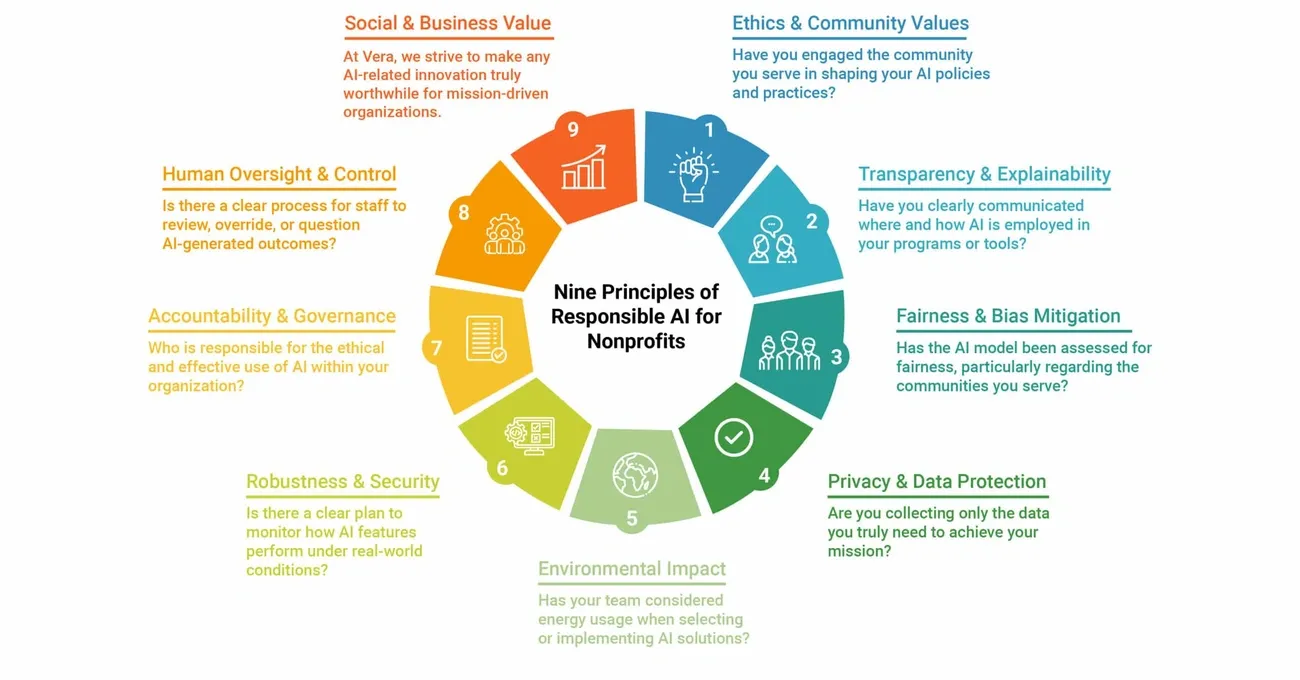
Image Source: Vera Solutions
A reliable ai governance framework needs strong ethical foundations to work well over time. AI technologies now cross borders and industries worldwide. This has led international organizations to create detailed guidelines that have become the life-blood of responsible AI use globally.
OECD AI Principles and UNESCO Ethics Guidelines
The OECD AI Principles have shaped global artificial intelligence governance since their adoption in 2019 and recent update in May 2024. These principles help create AI that people can trust while protecting human rights and democratic values. The principles now guide 47 countries, making them the first worldwide standard for AI. They focus on:
- Inclusive growth and sustainable development
- Human rights and democratic values
- Transparency and explainability
- Robustness, security, and safety
- Accountability
UNESCO’s Recommendation on the Ethics of AI adds another key element to ai governance policy. All 193 member states unanimously adopted this framework in 2021. It protects human rights, dignity, and supports eco-friendly practices. UNESCO’s approach stands out because it shows exactly how to monitor, evaluate, and put these ideas into practice.
Governments have launched over 1,000 policy initiatives across more than 70 jurisdictions by May 2023, following OECD AI Principles. This widespread adoption shows how these ethical frameworks help countries work together on AI governance.
Human-centric design and proportionality
User-focused design sits at the heart of effective ai governance and ethics. This approach wants to increase and uplift human intelligence and work. It makes sure AI systems improve rather than reduce human control.
AI systems should only do what’s needed to reach legitimate goals – this is proportionality. Ethical AI frameworks require organizations to get a full picture of risks before using AI. They must balance AI benefits against privacy risks and collect only essential data.
People need to stay in control of AI systems. Both OECD and UNESCO frameworks stress this point. They suggest using “human-in-the-loop” and “human-over-the-loop” designs so people retain control throughout the AI system’s life.
Accountability and redress mechanisms
Accountability is vital for responsible ai governance. Organizations must be able to audit and track AI systems. Carnegie Council research shows that machine learning’s complexity and multiple stakeholders often make it hard to assign responsibility.
Everyone involved in AI development shares responsibility. Developers who create AI models must work with teams who use them. They need to share information about intended uses and actual effects [42, 43].
People and communities need ways to fix AI-caused problems. Without the right to challenge AI decisions, users lose power in AI-driven processes. Research shows that people only try to challenge AI decisions if they think they’ll succeed.
Organizations should set up internal complaint services for good ai governance principles. They need to work with outside groups to find bias issues and support consumer rights groups. These steps become more important as AI spreads through healthcare, finance, and criminal justice.
Controls for AI Risk Management and Compliance
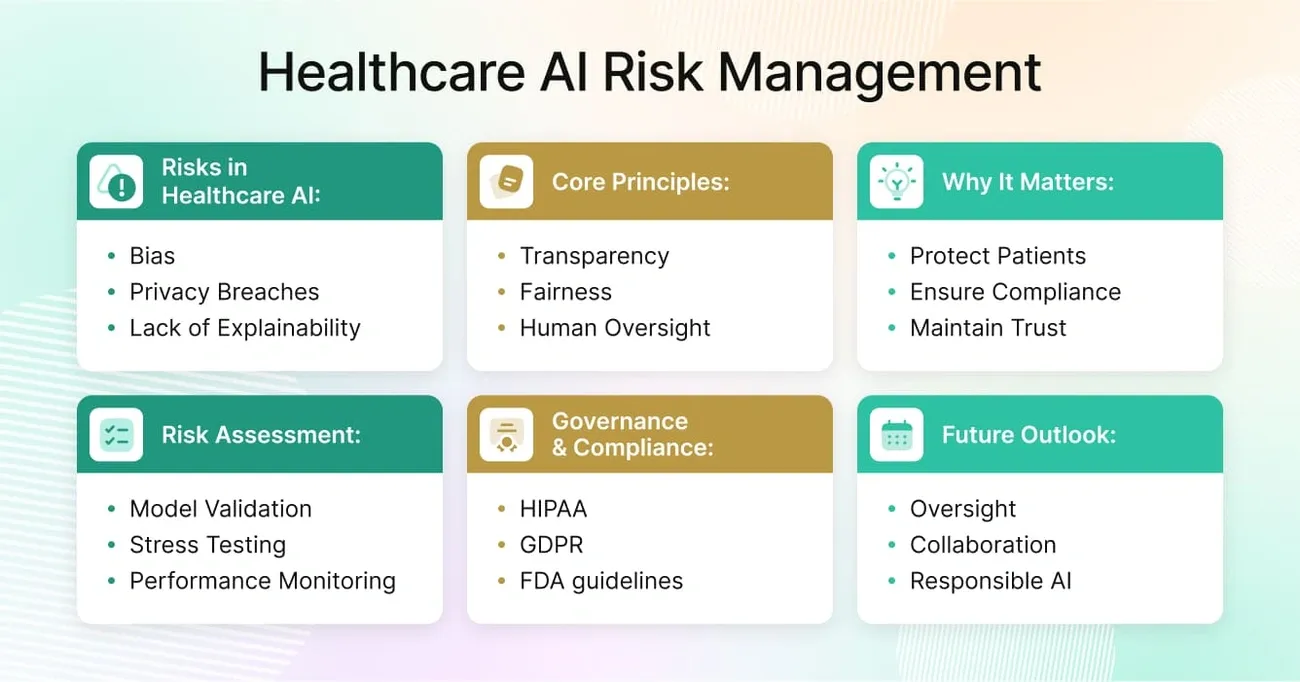
Image Source: Pacific AI
Proper controls serve as the operational backbone of any ai governance framework. A recent study shows only 30% of organizations have formal incident response plans to deal with algorithmic failures. Setting up oversight mechanisms has become vital to deploy AI responsibly.
Model risk classification and inventory tracking
Organizations need a detailed classification system for their AI models. The EU AI Act offers a structured approach that puts AI systems into four risk levels: unacceptable, high, limited, and minimal risk. Each level comes with different regulatory requirements. High-risk systems need the most oversight. These systems include AI used in critical infrastructure, education, employment, access to essential services, law enforcement, and democratic processes.
A complete model inventory is just as important as classification. This inventory should track:
- Model specifications and intended use cases
- Risk classification and corresponding compliance requirements
- Data sources and processing methodologies
- Performance metrics and evaluation criteria
- Ownership and accountability structures
A good inventory tracking system helps organizations spot new risks that weren’t documented before. It also supports internal assessments and audits. This becomes vital as organizations align their internal policies with established frameworks like NIST and ISO standards.
Incident response protocols for AI failures
Organizations need structured protocols to respond to AI incidents. Traditional security breach protocols don’t deal very well with AI-related harms—from data bias and discrimination to broader societal risks. Your AI governance policy should include specific protocols that cover:
Notification requirements for each jurisdiction where you operate. This includes communication plans and stakeholder roles for regulatory investigations. You need thorough documentation since regulators might ask for extensive technical details about model development and usage, along with evidence of impact assessments.
Response workflows with immediate containment measures like pausing key features or using “kill switch” measures to stop further harm. Your protocols should also define clear decision-making processes for incident escalation and handling, especially for high-impact AI systems.
Team composition that brings together technical professionals, legal advisors, communication specialists, and business representatives. This mix of expertise ensures you can handle various AI incident scenarios effectively.
Continuous monitoring and audit logging
Responsible AI governance needs constant alertness through strong monitoring systems. Immediate data analysis tracks AI systems’ performance at any given moment. This includes performance metrics, KPIs, and feedback loops for improvement.
Detailed audit logging is essential throughout an AI system’s life for both compliance and improvement. The system should automatically create audit logs when users interact with AI or administrators change settings. These logs must record:
- Which user interacted with the system
- At the time and location of interaction
- References to resources accessed by the AI
- Any policy restrictions or security concerns
For non-Microsoft AI applications, audit logs usually keep information for 180 days. This helps with security monitoring and proves compliance. These logs become vital evidence in regulated industries to show adherence to governance frameworks.
Organizations create a structured approach to artificial intelligence governance by putting these three control mechanisms—classification, incident response, and monitoring—in place. This balances innovation with risk management. Businesses can guide themselves through the complex AI world while keeping both regulatory compliance and stakeholder trust intact.
Management Review and Approval Mechanisms
“Enterprises should also design AI systems in a way that ensures that humans maintain ultimate control over their operation through regular, logical, human-run auditing.” — Colin Priest, Chief Evangelist at FeatureByte, AI risk management specialist
AI governance and ethics needs well-laid-out human oversight mechanisms that balance autonomy with accountability. A well-thought-out management review framework helps ensure AI systems stay within acceptable risk parameters.
Human-in-the-loop vs. human-over-the-loop models
Human-in-the-loop (HITL) and human-over-the-loop (HOTL) models offer different approaches to AI oversight with key operational differences. HITL systems directly involve human judgment in decision-making. HOTL setups let AI work independently while humans watch and step in when needed.
HITL systems make humans:
- Active validators who approve AI outputs before execution
- Exception handlers for edge cases
- Feedback providers who improve model performance
- Domain experts who add specialized knowledge
HOTL frameworks put humans in a monitoring role with oversight capabilities. This setup works well when AI has shown reliability but the stakes remain too high for full automation. HOTL’s main strength lies in its mix of efficiency and human judgment—AI handles large volumes quickly while humans tackle complex, nuanced tasks.
Review boards for high-impact AI deployments
Board members play a crucial role in AI governance. They bring a broader view that adds value to management’s day-to-day focus. Directors help management pause and build strategic frameworks that match resources with the most valuable projects.
Review boards overseeing high-impact AI deployments need:
- Cross-functional representation (technical, legal, ethical)
- Clear escalation paths for high-risk scenarios
- Documented decision criteria and thresholds
- Regular reviews with formal approval processes
Boards must look beyond AI technology adoption to organizational readiness. One director pointed out, “Boards are asking, ‘How are we using AI?’ instead of asking, ‘How are we making sure our people are ready?'”. This oversight covers change management and human capital implications alongside technical aspects.
Approval workflows for generative AI use cases
Risk-based governance recognizes that generative AI applications carry different risk levels. Internal meeting summaries pose different risks than customer-facing financial advice. Approval workflows should adjust oversight based on risk level.
Good approval processes include:
- Multi-stage procedures balancing oversight with efficiency
- Automated routing systems coordinating complex approval sequences
- Documentation requirements backing decisions with accurate information
- Conditional approval paths matching oversight to specific use cases
These workflows should set clear checkpoints before resource-heavy development begins. AI can help streamline approval flows by reviewing context and suggesting actions while humans keep final control based on confidence scores.
Organizations create solid governance architecture through these review and approval mechanisms. This setup keeps human judgment as the final authority while supporting responsible AI innovation.
Implementing AI Governance Frameworks in Practice
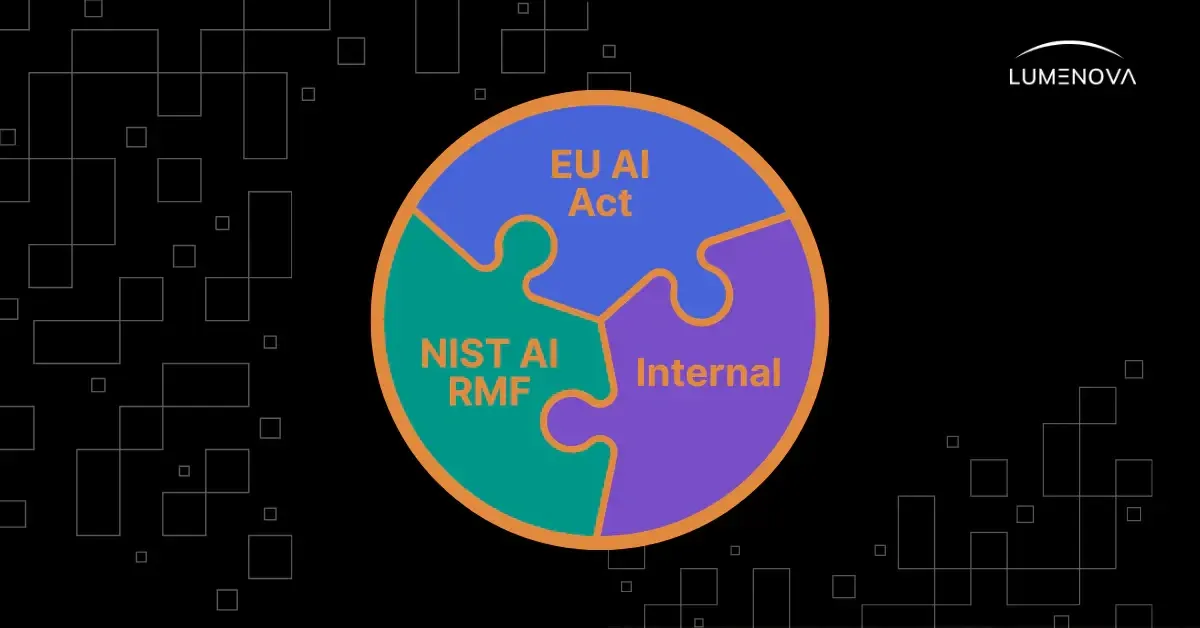
Image Source: Lumenova AI
Organizations need systematic approaches to turn ai governance principles into real-world practices. A practical governance framework helps organizations manage AI risks better.
Mapping internal policies to NIST and ISO standards
Smart organizations see AI governance as another part of their existing strategies and risk practices. The NIST AI Risk Management Framework provides a structured approach with four core functions—Map, Govern, Measure, and Manage. These functions serve as baseline controls for new regulations. ISO 42001 brings a detailed framework specifically built for responsible AI development and management. Organizations create a unified approach to compliance and risk management when they arrange internal policies with these proven standards.
Creating an AI governance policy document
Your ai governance policy should include these key elements:
- Clear definitions of AI-related terms
- Permitted and prohibited AI uses
- Governance and approval processes
- Accountability mechanisms and oversight structures
- Transparency guidelines and training requirements
The policy should mirror your organization’s values while tackling ethical considerations and regulatory compliance. The policy stays current through regular reviews and updates as the digital world changes.
Training teams on responsible AI practices
Team competencies are the foundations of any artificial intelligence governance initiative. Your training should cover both technical aspects and ethical implications. Teams from legal, compliance, and technical backgrounds should learn from each other. AI learning hubs give teams space to experiment while following established guidelines.
You can book a readiness call with governance experts to help customize frameworks based on your organization’s needs and risk profile as you build your responsible ai governance approach.
Best Practices for Sustainable AI Governance
Long-term ai governance and ethics needs constant updates after the original setup. Companies with strong frameworks use three main practices that balance responsible innovation.
Automating compliance with policy-as-code
Policy-as-code changes manual governance into programmatic rules. Companies can enforce policies reliably at scale with this approach. The benefits include:
- Reduced human error through automated enforcement
- Increased efficiency by eliminating repetitive manual reviews
- Better visibility with standardized, shareable code
Red Hat sees automated Policy-as-Code working alongside existing automation. Their compliance controls check operations against policies before execution. This stops unauthorized actions while keeping detailed audit trails.
Running red-teaming and adversarial testing
Red-teaming helps test AI systems to find weaknesses before deployment within your ai governance framework. Teams think over ways to make models generate harmful content or bypass safety controls.
Good adversarial testing works as an extended way to line up systems. It helps find edge cases where AI systems might fail. Teams can strengthen safety guardrails by feeding new instruction data to models once they spot vulnerabilities.
Updating governance protocols with regulatory changes
Artificial intelligence governance must adapt to changing regulations in different regions. Recent policy notices that challenge too much state regulation show why companies need to watch these regulatory moves that affect AI operations.
Companies need small teams from legal, compliance, privacy, security, and AI to track regulatory changes every quarter instead of random updates. This helps create lasting governance. Book a Readiness Call with governance experts to set up protocols that can handle these ongoing changes.
Conclusion
AI governance and ethics face a crucial turning point today. Organizations must choose between setting up strong frameworks or facing serious consequences in today’s regulated environment. This piece shows how proper governance structures protect against damaged reputations, legal issues, and money losses while supporting responsible breakthroughs.
Strong ethical foundations like OECD AI Principles, UNESCO guidelines, human-centricity, proportionality, and accountability systems create the base for any detailed governance plan. Teams need to turn these principles into real controls through model risk sorting, incident response plans, and monitoring systems that catch problems early.
Management’s review process acts as a safety net against AI overreach. Teams use human-in-the-loop models, review boards for major deployments, and approval systems to watch different risk levels closely. Human judgment stays crucial even as automation grows.
Real-world success needs internal policies that match NIST and ISO standards. Your organization’s governance policy becomes a guiding light that helps teams navigate tricky ethical situations and clearly shows who handles what. When combined with good training, these documents help build responsible practices across the company.
Long-term governance needs constant alertness. Teams should automate compliance through policy-as-code, run regular red-team tests, and update rules as regulations change. These steps build strong frameworks that hold up under pressure.
Building good AI governance might look tough at first. But letting AI run wild creates nowhere near the same risks to your company’s future. Companies that build detailed governance frameworks gain advantages through better trust, fewer risks, and more sustainable growth paths.
The question now changes from whether you need AI governance to how fast you can build working frameworks that balance growth with responsibility. Your company’s future success might depend on how you handle this challenge.
Key Takeaways
Effective AI governance is no longer optional—it’s a business imperative that protects organizations from significant legal, financial, and reputational risks while enabling responsible innovation.
• Establish risk-based controls: Implement model classification systems, incident response protocols, and continuous monitoring to manage AI risks systematically across your organization.
• Create structured oversight mechanisms: Deploy human-in-the-loop or human-over-the-loop models with dedicated review boards for high-impact AI deployments to maintain accountability.
• Align with established frameworks: Map internal policies to NIST AI RMF and ISO standards while creating comprehensive governance documents that define permitted uses and approval processes.
• Build sustainable practices: Automate compliance through policy-as-code, conduct regular red-team testing, and update protocols quarterly to adapt to evolving regulations.
• Prioritize human-centric design: Ensure AI systems augment rather than replace human judgment, with clear accountability mechanisms and redress options for affected stakeholders.
The stakes are high—with potential EU AI Act fines reaching €35 million and 82% of organizations lacking comprehensive governance plans, proactive implementation of these frameworks becomes critical for long-term business success and regulatory compliance.
FAQs
Q1. Why is AI governance becoming increasingly important for businesses? AI governance is critical because it helps organizations manage risks, ensure compliance with regulations, and maintain stakeholder trust. Without proper governance, businesses face reputational damage, legal liabilities, and potential financial losses from AI-related incidents.
Q2. What are some key components of an effective AI governance framework? An effective AI governance framework typically includes ethical foundations, risk management controls, management review mechanisms, and compliance processes. Key components are model risk classification, incident response protocols, continuous monitoring, and structured approval workflows.
Q3. How can organizations implement AI governance in practice? Organizations can implement AI governance by mapping internal policies to established standards like NIST and ISO, creating a comprehensive AI governance policy document, and providing training on responsible AI practices to their teams. Regular reviews and updates of these policies are also crucial.
Q4. What role do human oversight mechanisms play in AI governance? Human oversight mechanisms are essential in AI governance to maintain accountability and ensure ethical decision-making. This can involve human-in-the-loop or human-over-the-loop models, review boards for high-impact AI deployments, and structured approval processes for different AI use cases.
Q5. How can businesses ensure their AI governance remains effective over time? To maintain effective AI governance, businesses should automate compliance through policy-as-code approaches, conduct regular red-teaming and adversarial testing of AI systems, and update governance protocols to align with evolving regulations. Establishing cross-functional teams to monitor regulatory changes is also beneficial.