
An ISO 42001 ISO 42001 audit readiness checklist gives a CEO a single, ordered way to move an organization from scattered AI practices to a certifiable AI Management System (AIMS). ISO/IEC 42001:2023 is the first international standard for managing AI, and certification signals to customers, regulators, and boards that an organization governs its AI responsibly rather than by assertion. This ISO 42001 audit readiness checklist walks through the five stages that carry an organization from defining scope to passing the certification audit and maintaining it afterward. Each stage is written as a checklist a CEO can hold a team accountable to.
A note on what this piece is and is not. It sets out the readiness path and the decisions leadership owns. It does not restate the full text of the standard, and figures such as cost and duration are reported ranges that vary widely by organization size and maturity, not guarantees.
Before You Start the ISO 42001 Audit Readiness Checklist
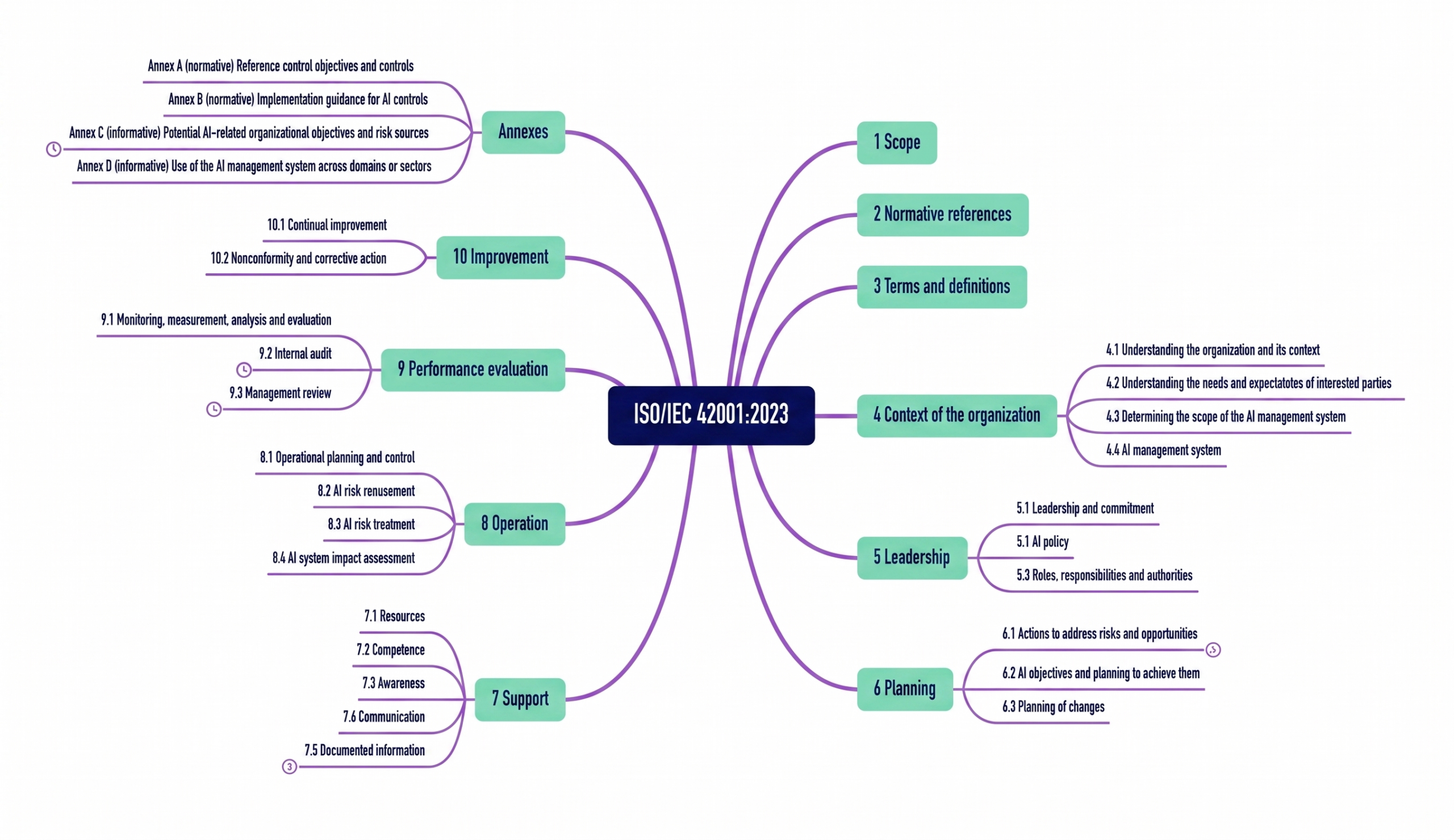
ISO/IEC 42001:2023 sets out ten clauses, with the auditable requirements in Clauses 4 through 10, and it carries a normative Annex A that provides 38 controls grouped under nine control objectives numbered A.2 through A.10. The management-system shape matches ISO 27001 and ISO 9001, which is why an organization with a mature ISO 27001 program has a real head start on the ISO 42001 audit readiness checklist. For how much transfers between the two, see how ISO 42001 overlaps with ISO 27001 and ISO 9001.
The business case is straightforward. Enterprise procurement increasingly asks vendors to prove AI governance, and certification answers that in a way self-attestation cannot. It also forces an organization to find its true AI footprint, which is usually larger than leadership assumes once shadow AI in everyday tools is counted. One 2024 industry trust report found that only about 37% of organizations run regular AI risk assessments, so a certified program is still a differentiator rather than a baseline.
Reported certification effort runs roughly 4 to 12 months depending on size, AI maturity, and whether an ISO 27001 program already exists, and reported costs range from a few thousand dollars in audit and implementation fees for smaller organizations to six-figure programs for large enterprises. Treat any single published figure with caution and budget against a scoped estimate rather than a headline number.
Stage 1: Define Scope and Executive Alignment
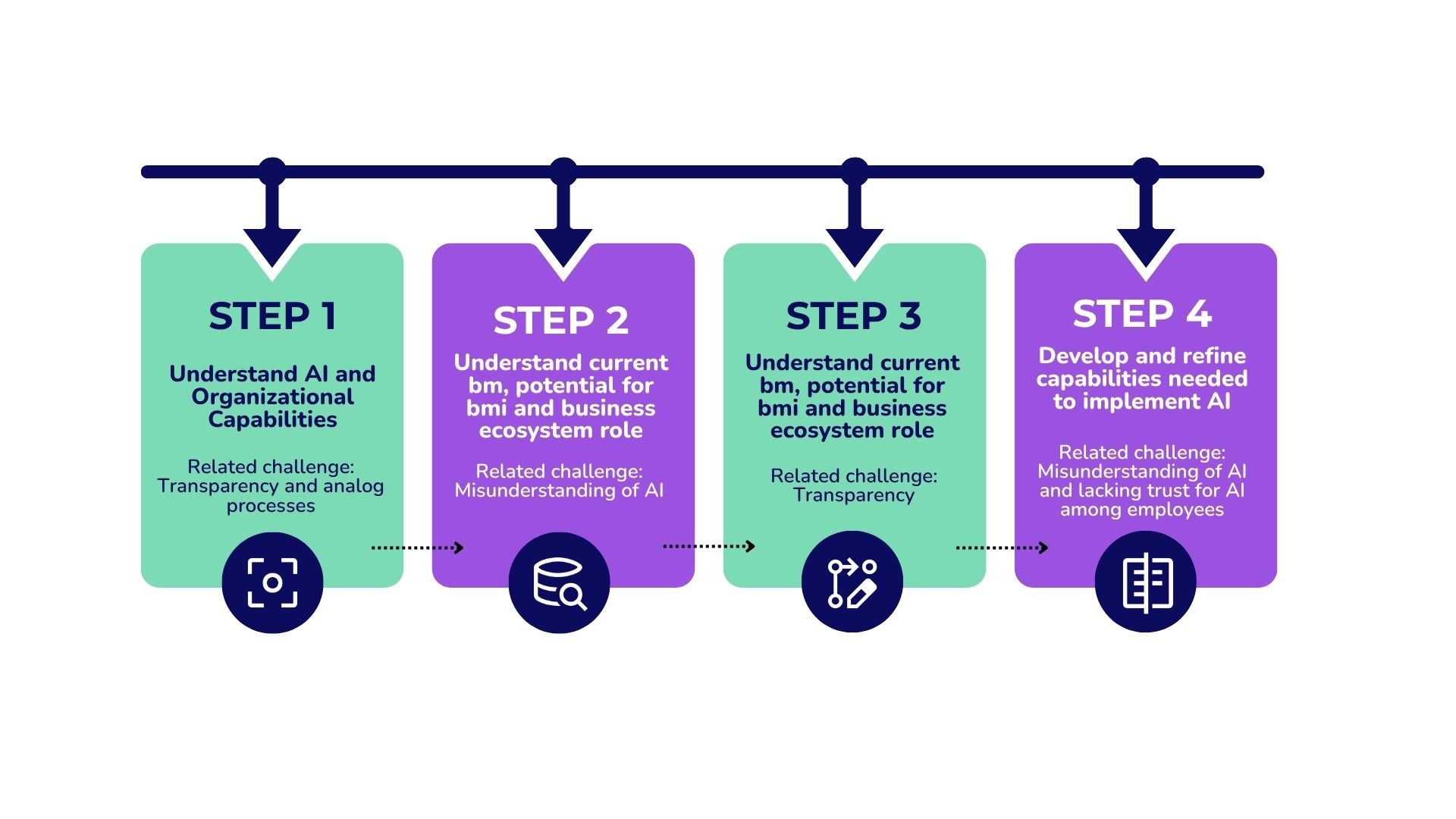
Scope is the decision that governs the size, cost, and duration of everything that follows, which is why it opens the ISO 42001 audit readiness checklist and is one a CEO cannot delegate entirely.
Map AI Systems, Models, and Data Flows
Clause 4.3 requires an organization to set the boundaries and applicability of its AIMS, and that starts with a complete inventory. A central register should list every AI system, model, and automated decision tool, whether built in-house or procured, along with its business purpose, the data it processes, its risk classification, its owner, and its integration points. Organizations routinely cannot enumerate the AI already in use across their units, and governance is impossible over what has not been cataloged. Categorize each system by impact, complexity, and risk, because that classification drives how much control each one needs.
Assign an Executive Sponsor and a Compliance Owner
Clause 5 places responsibility for the AIMS with top management, and that commitment has to be visible in resource allocation and policy approval, not just a signed charter. A designated compliance owner, whether an individual or a small team, runs the program day to day, and a cross-functional governance committee drawn from legal, risk, security, data science, and business operations gives it the authority to make organization-wide changes. Authority has to match responsibility: the person accountable for a control needs the power to change it, so roles assigned on seniority alone leave gaps between paper accountability and real control.
Determine the Organization’s AI Role
ISO 42001 uniquely requires an organization to state its role relative to each in-scope AI system, and that determination shapes which controls apply. The roles are producer or developer (designs, builds, tests, and deploys models), provider (offers AI products or services to others and carries responsibility for performance and compliance), and user or customer (deploys AI procured from others). Many organizations hold several roles at once: a company that integrates a third-party model into a service it sells is both a customer of that model and a provider to its own clients. A provider bears the fullest scope; a customer-only organization may not need certification at all unless it operates AI in high-risk contexts.
Align AIMS Scope With the Standard
With systems inventoried and roles set, the scope statement should name the specific business activities, AI systems, locations, and departments covered, and manage the interfaces to anything left outside it. The most common audit flag at this stage is a scope drawn too vaguely or one that quietly excludes a high-risk system core to the business. Auditors check that the boundary aligns with the documented organizational context and does not carve out the systems that matter most.
Stage 2: Conduct Gap Analysis and Build Roadmap
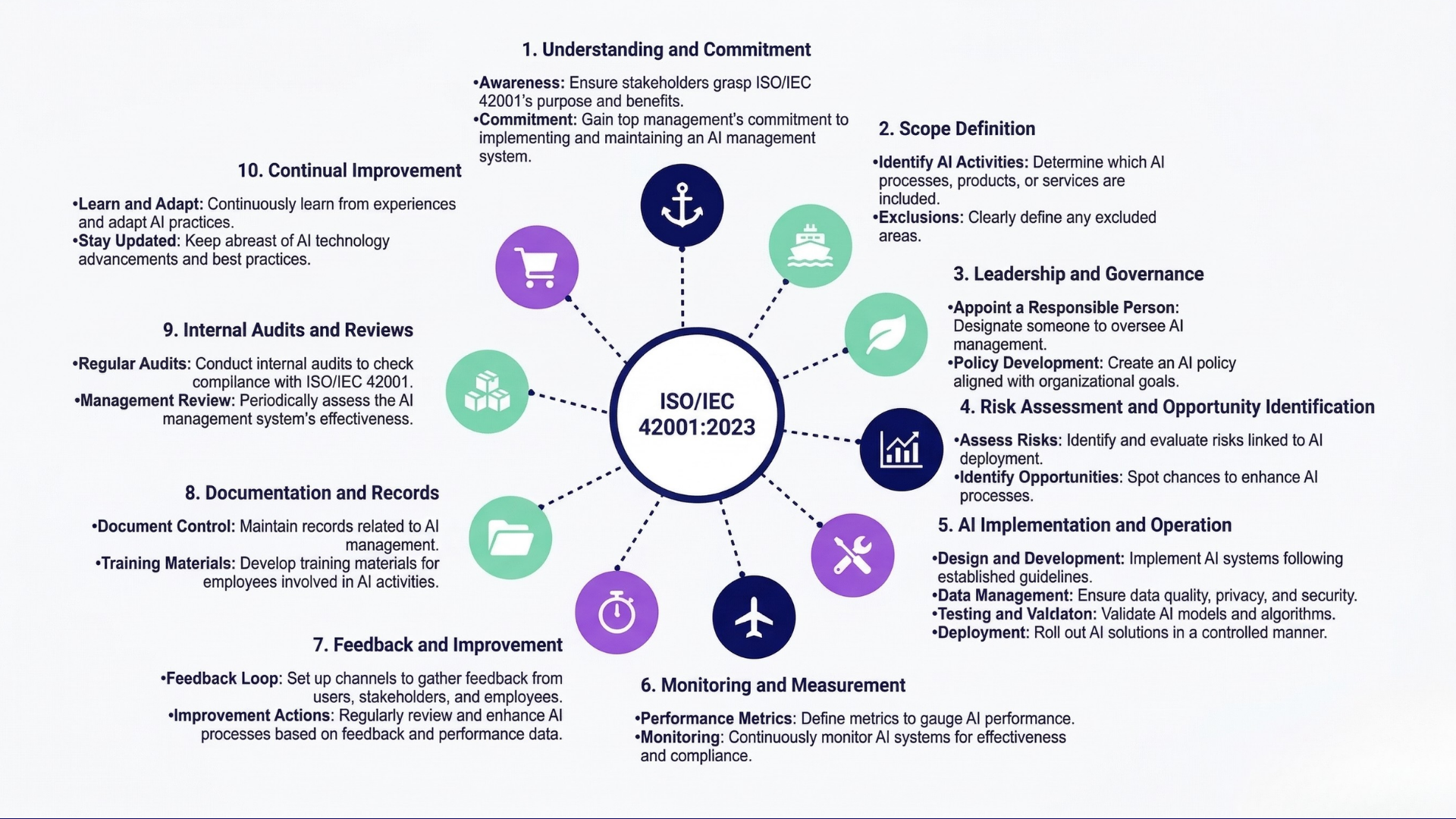
The second stage of the ISO 42001 audit readiness checklist is measurement. Once scope and sponsorship exist, a clause-by-clause gap analysis measures current practice against the standard and turns the difference into a plan.
Compare Current Controls to the Standard
Review existing AI governance against Clauses 4 through 10 and the 38 Annex A controls, marking each requirement compliant, partially compliant, or not compliant. Gather the evidence that exists today: policies, procedures, risk assessments, and data-handling records. The gaps that surface most often are consistent across organizations: no documented AI risk methodology, missing model documentation and data lineage, bias and fairness testing that is not performed or not recorded, human oversight that exists in principle but has no defined triggers, and vendor governance with no AI-specific controls.
Prioritize Gaps by Risk and Regulatory Exposure
Clause 6.1 frames remediation around risk, so gaps tied to high-impact AI, decisions in domains such as hiring, credit, or health, and clear regulatory exposure come first, while minor documentation gaps come later. A simple risk matrix sorted by likelihood and impact ranks the work and keeps resources on the issues that would actually fail an audit or harm a person.
Frame AI-Specific Risks Systematically
AI risk is broader than model accuracy, and a defensible gap analysis names the categories the standard expects an organization to consider. Public research such as the MIT AI Risk Repository catalogs well over a thousand documented AI risks drawn from dozens of frameworks, which is a useful checklist against blind spots. In practice the categories worth assessing include discrimination and bias, privacy and security, misinformation, malicious misuse, problematic human-AI interaction such as overreliance, socioeconomic and environmental impact, and system failures from misaligned goals or lack of robustness. Rating each by likelihood and impact keeps the ISO 42001 audit readiness checklist focused on the risks that would actually harm a person or fail an audit.
Assign Owners and Deadlines
Every gap becomes an action with a named owner and a real deadline, tracked like a backlog so progress is visible. An organization with a mature ISO 27001 program can reuse a substantial share of its risk management, internal audit, and management review machinery here, because both standards share the Annex SL structure, which shortens the effort and lowers the cost.
Stage 3: Implement Policies and Lifecycle Controls
Stage three of the ISO 42001 audit readiness checklist turns the roadmap into operating governance, and it needs visible leadership because policy without executive weight does not hold.
Approve AI Governance and Acceptable Use Policies
Leadership approves an AI policy that defines acceptable and prohibited uses, risk tolerance, human oversight expectations, data governance principles, vendor standards, and incident escalation, and communicates it across the organization. The policy has to integrate with business strategy and existing risk processes rather than sit beside them, because the standard treats AI risk as ethical, legal, and social, not merely technical.
Build Lifecycle Controls From Design to Decommissioning
ISO 42001 governs the whole AI lifecycle, so each stage from design through development, validation, deployment, operation, and retirement needs documented processes. Verification and validation measures test systems against defined criteria for performance, safety, and reliability, and technical documentation has to be ready for users, partners, and, where relevant, supervisory authorities.
Ensure Logging, Traceability, and Bias Testing
The Annex A controls covering records and logging require event logs across the lifecycle that capture context (timestamps, system identifiers, lifecycle stage, and model version) and actions (who did what and why). Logs should be append-only and integrity-protected, with retention rules that match legal and organizational policy. Alongside logging, systematic bias and fairness testing, explainability documentation, and model-drift monitoring give the evidence an auditor looks for that governance is operating rather than merely written down.
Stage 4: Validate Readiness Through Internal Audits
The internal audit stage of the ISO 42001 audit readiness checklist is the reality check before an external auditor arrives, and Clause 9.2 requires audits at planned intervals, conducted by people independent of the work they review.
Run a Complete Internal Audit Cycle
Complete at least one full internal audit cycle before certification. A useful audit report sorts findings into conformities, minor nonconformities, major nonconformities, and observations, and it reviews the AIMS against both the clauses and the Annex A controls in scope. This is where an organization confirms that its governance works in practice, not only on paper.
Remediate Nonconformities and Close Them
Each nonconformity needs root cause analysis rather than a symptom fix, a named owner, a deadline, documented changes, and evidence of closure verified by follow-up. Organizations that close their internal findings before the external assessment certify faster, because they are not discovering problems in front of the certification body. For a structured way to pressure-test readiness before the real thing, see mock audit results and the final path to ISO 42001 success and internal audit planning for ISO 42001.
Review AIMS Performance in Management Reviews
Senior leadership reviews AIMS performance against audit findings, risk status, and objectives, and records decisions, resource allocations, and improvement actions. These management reviews are themselves audit evidence: they show that AI risk is being governed at the top rather than drifting unnoticed.
Stage 5: Prepare for Certification and Continuous Monitoring
The final stage of the ISO 42001 audit readiness checklist moves from internal validation to external certification and the ongoing obligations that follow it.
Build the Statement of Applicability and Evidence Package
The Statement of Applicability is one of the most scrutinized documents in the audit. It lists which Annex A controls are included or excluded, the rationale for each decision, how each included control is implemented, and its owner. Alongside it, centralize the evidence: policies, risk and impact assessments, testing and monitoring records, internal audit results, and management review minutes. Scattered evidence is the most common cause of audit delay; a single well-labeled repository is the fix.
Understand the Two-Stage Audit
Certification follows a two-stage process under ISO/IEC 17021, the same structure as ISO 27001. Stage 1 is a documentation review, typically 1 to 2 days, that checks readiness against scope, policy, risk methodology, and the Statement of Applicability, and returns any areas of concern to fix. Stage 2 is an operational assessment, typically 3 or more days depending on size and complexity, that tests whether the AIMS actually works through interviews, observation, and evidence sampling. The gap between the two stages should not exceed six months. For what the certification-body review looks for, see ISO 42001 certification readiness and the third-party review.
The table below summarizes the two stages.
| Dimension | Stage 1 | Stage 2 |
|---|---|---|
| Focus | Documentation and readiness | Operating effectiveness |
| Typical duration | 1 to 2 days | 3 or more days |
| What auditors examine | Scope, policy, risk method, Statement of Applicability | Interviews, observation, evidence sampling against controls |
| Typical artifacts | Roughly 20 to 25 | Roughly 50 to 75 |
The practical reading of the table is that Stage 1 tests whether the system is designed correctly and Stage 2 tests whether it is lived. Passing Stage 1 with unresolved concerns simply moves the problem into the more expensive stage, so the concerns Stage 1 raises should be closed before Stage 2 begins.
Select an Accredited Certification Body
Accreditation is the first vetting criterion for a certification partner. Confirm the body holds accreditation from a recognized authority such as ANAB, UKAS, or RvA, verifiable through the IAF CertSearch database, and that it has genuine AI governance experience. This relationship usually runs for years across the surveillance cycle, so the choice matters beyond the first audit.
Plan for Surveillance and Recertification
The certificate is valid for three years, but it is not static. Annual surveillance audits, roughly a third the length of the original, verify continued compliance, review changes to AI systems, and check progress on prior findings, and annual attestation of continued conformance is expected. A recertification audit in year three reassesses the full scope. Certification is the start of the governance program, not its finish, and continuous monitoring of performance, drift, and incidents is what keeps it valid. For evidence discipline at the final audit, see final audit and evidence collection for ISO 42001.
To pressure-test an organization’s readiness against this checklist before committing to a certification body, book a readiness call with an Elevate advisor.
Conclusion
ISO 42001 certification rewards sequence. Define scope and secure executive ownership, measure the gap and assign it, implement policies and lifecycle controls, validate through internal audit, and only then engage a certification body. The organizations that struggle are almost always the ones that skipped the front of the checklist: a vague scope, an absent sponsor, or evidence scattered across systems. The organizations that pass treated the ISO 42001 audit readiness checklist as the work and the audit as confirmation.
For a CEO, the value of the ISO 42001 audit readiness checklist is larger than a certificate. The scope map, the risk framework, the logging, and the management reviews built for certification are the same assets that let an organization scale AI with confidence and answer procurement, regulators, and the board without scrambling. To scope this path against a specific AI footprint, book a readiness call with an Elevate advisor.
Key Takeaways
An ISO 42001 audit readiness checklist turns AI governance from an abstract goal into an ordered, accountable program a CEO can lead.
Scope is the decision that sizes everything. Inventory every AI system, set the organization’s role, and draw a boundary that does not exclude the high-risk systems core to the business.
The gap analysis is the roadmap. The second step of the ISO 42001 audit readiness checklist measures current practice against the ten clauses and the 38 Annex A controls, then prioritizes the gaps by risk and assigns each an owner and a deadline.
Evidence has to be operating, not just written. Logging, bias testing, model-drift monitoring, and management reviews are what an auditor samples to confirm the AIMS is lived rather than documented.
The audit is two stages. Stage 1 tests design through documentation, Stage 2 tests operation through interviews and sampling, and Stage 1 concerns should be closed before Stage 2 begins.
Certification is the start, not the finish. The three-year certificate carries annual surveillance and attestation, so continuous monitoring keeps it valid and turns the readiness work into a durable asset.
FAQs
Q1. What is an ISO 42001 audit readiness checklist?
It is an ordered set of steps that prepares an organization to pass ISO 42001 certification, covering scope definition, gap analysis, control implementation, internal audit, and certification preparation. The checklist exists because certification rewards sequence: a vague scope or missing evidence discovered late is far more expensive to fix than the same issue caught early. Used well, it lets leadership hold each stage accountable to a named owner and a deadline.
Q2. How long does ISO 42001 certification take to prepare for?
Reported timelines run roughly 4 to 12 months, and the spread is real rather than noise. A small organization with a handful of AI systems and a mature ISO 27001 program can be ready in a few months, while a large enterprise starting from scratch can take a year or more. The main drivers are the size of the AI footprint, existing governance maturity, and how much of an ISO 27001 program can be reused.
Q3. How many controls does ISO 42001 have?
ISO/IEC 42001:2023 has ten clauses, with auditable requirements in Clauses 4 through 10, and a normative Annex A that provides 38 controls grouped under nine control objectives numbered A.2 through A.10. Some sources incorrectly cite 42 controls, which is a common error; the correct figure is 38 controls under 9 objectives. An organization documents which of those controls it applies, and why, in its Statement of Applicability.
Q4. What is the difference between the Stage 1 and Stage 2 audits?
Stage 1 is a documentation review, usually 1 to 2 days, that assesses whether the AIMS is designed correctly by examining scope, policy, risk methodology, and the Statement of Applicability. Stage 2 is an operational assessment, usually 3 or more days, that tests whether the system actually works through interviews, observation, and evidence sampling against the controls. The time between the two stages should not exceed six months, and concerns raised at Stage 1 should be closed before Stage 2 begins.
Q5. How is ISO 42001 certification maintained after it is granted?
The certificate is valid for three years but requires annual surveillance audits, each roughly a third the length of the original, that verify continued compliance and review changes to AI systems and progress on prior findings, along with annual attestation of continued conformance. A full recertification audit occurs in year three. Maintaining certification depends on continuous monitoring of AI performance, model drift, and incidents, which is why certification is best treated as the start of a governance program rather than its conclusion.