
FedRAMP cloud adoption grows faster across the federal government’s digital world, opening new opportunities and challenges for agencies and service providers alike. The FedRAMP Authorization Act became law in December 2022, establishing FedRAMP as the authoritative standardized approach for security assessment and authorization. This legislative milestone highlights FedRAMP’s vital role in connecting cloud computing agility with strict government security requirements.
A clear understanding of scope helps shape your FedRAMP strategy. FedRAMP covers cloud computing products and services that create, collect, process, store, or maintain Federal information for Federal agencies. Private cloud deployments do not fall under FedRAMP, though these environments need proper security controls. Cloud-only services can cut costs by 20% compared to hybrid setups, making the choice between deployment models a crucial financial decision.
This piece dives into the key differences between FedRAMP cloud-only and hybrid deployment models. You’ll learn which approach suits different scenarios, what compliance means for both options, and how to keep your implementation FedRAMP-compliant as you start your journey.
Defining Your FedRAMP Deployment Scope
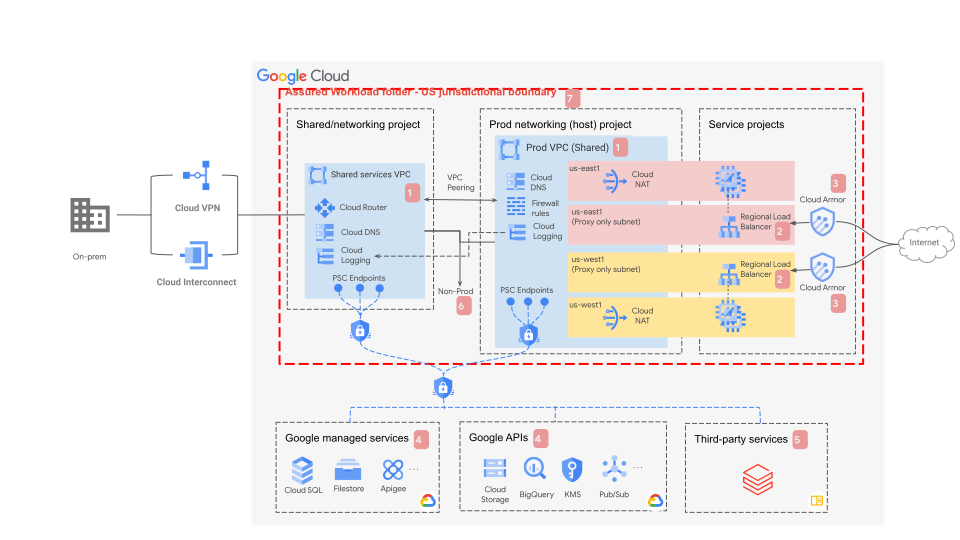
Image Source: Google Cloud Documentation
A well-defined scope of your FedRAMP cloud deployment is the foundation of getting authorization. The Federal Risk and Authorization Management Program (FedRAMP) gives a standard way to assess, monitor, and authorize cloud computing products and services under the Federal Information Security Management Act (FISMA). This helps federal agencies adopt secure cloud solutions faster.
What Constitutes a FedRAMP Cloud System
A FedRAMP cloud system covers all information resources that a cloud service provider manages. These resources either handle federal information or could affect federal information’s confidentiality, integrity, or availability. The scope has hardware components (servers, storage devices, network equipment), software components, data components, personnel components, and third-party services within the authorization boundary.
FedRAMP rules apply to cloud services that process, store, or transmit federal information. Not every internet-based service needs FedRAMP oversight. Official guidance tells agencies to check these key points:
- Does the planned use fit agency responsibilities under 44 U.S. Code § 3506?
- Does the cloud service need an agency-specific tenant setup?
- Will the service combine with agency enterprise security services?
- Can multiple agencies use the service?
The system falls under FedRAMP if you answer yes to all questions. If all answers are no, FedRAMP requirements don’t apply.
Understanding FedRAMP Private Cloud vs Public Cloud
FedRAMP follows NIST SP 800-145 definitions for cloud deployment models:
Government-Only Community Cloud: This cloud holds only government data. Users can be federal, state, local, tribal agencies, federally funded research centers, or contractors working for the government.
Public Cloud: This model serves both government and non-government customers, matching the usual cloud computing service approach. It scales quickly and runs efficiently but needs careful security planning.
Private Cloud: Single organizations use this model, which runs fully in federal facilities. These deployments are all but one of these systems that must follow FedRAMP rules. Agencies should still use FedRAMP processes and baselines to authorize private clouds in IaaS/PaaS environments versus federal facilities.
Hybrid Cloud: This model links multiple cloud infrastructures (private, community, or public). Each cloud stays separate but connects to others to provide combined services.
Risk levels change across these models. Private clouds usually have the lowest risk while public clouds have the highest. Organizations should think about these risk levels when choosing their approach.
Scoping for FedRAMP Cloud Certification
Getting FedRAMP certification needs a clear authorization boundary that shows how the cloud service provider controls system components and connects to outside services. A well-laid-out boundary helps everyone learn about data flows and protection methods.
The cloud service provider starts by defining the authorization scope during preparation. They assign the core team and roles, and check how well they meet FedRAMP requirements. This work ends with an authorization package that has three main documents:
- System Security Plan (SSP): Shows how the organization handles security controls
- Security Assessment Report (SAR): A Third-Party Assessment Organization (3PAO) creates this
- Plan of Action and Milestones (POA&M): Lists steps to fix any weak spots
Cloud service providers must also decide if their Cloud Service Offering (CSO) fits government-only community, public, private, or hybrid models. This choice shapes the authorization approach and security needs.
The Minimum Assessment Scope sets basic requirements for all parts of a cloud service that need FedRAMP assessment. Good scoping builds the base for compliance, security assessment, authorization, and keeping track of everything.
FedRAMP Cloud-Only Architecture: When It Works Best
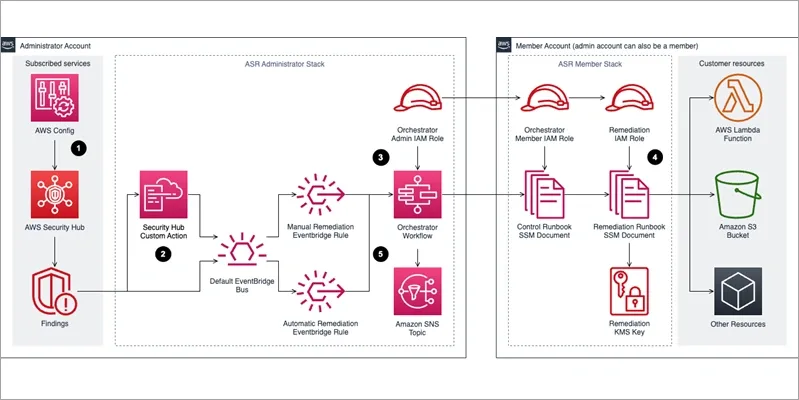
Image Source: AWS
Cloud-only architecture stands as the purest form of FedRAMP principles and offers clear advantages over hybrid approaches in certain scenarios. The cloud-only model removes the hassle of managing both on-premises and cloud environments. This creates a simpler security setup.
Single Environment Security and Monitoring
Cloud-only FedRAMP deployments shine in delivering unified security management throughout the system boundary. The FedRAMP PMO runs a complete continuous monitoring program to verify Cloud Service Provider (CSP) security. They look at complex configurations and encryption methods to make sure services stay secure and reliable. This approach removes the boundary issues that pop up in hybrid models.
The way we monitor cloud-only setups has changed substantially. FedRAMP now focuses on the CSP’s overall change management process rather than individual changes. CSPs can roll out changes at their own pace once they get authorization. They don’t need approval for each update. This lets them improve security faster while staying compliant.
On top of that, FedRAMP monitoring has regular vulnerability scans and deep security checks by expert “red teams” during or after authorization. This helps CSPs stay quick with development and deployment. They can automate and implement security features rapidly.
FedRAMP Google Cloud and Other Approved Providers
The biggest cloud providers offer extensive FedRAMP-authorized services:
- Google Cloud Platform (GCP) has FedRAMP High authorization for 17 services and Moderate authorization for 64 services. GCP’s FedRAMP High services run in five approved U.S. regions: Oregon, Los Angeles, Iowa, South Carolina, and Northern Virginia. Google Cloud created the Software Defined Community Cloud approach that brings cost, speed, and breakthrough advantages without needing separate physical infrastructure.
- Microsoft Azure leads with the most FedRAMP High Impact level services. Azure Public Services has 112 Moderate and High services. Azure Government Services offers 101 High services.
- AWS shows compliance by addressing FedRAMP security controls related to NIST SP 800-53. They use templates from the FedRAMP repository.
These authorized cloud services put key FedRAMP controls in place by default. This includes U.S. data location limits, FIPS-140 validated encryption, and staff access controls.
Simplified Audit and Documentation Requirements
Cloud-only setups make documentation and audits much easier. They remove the need to document complex connections between on-premises and cloud environments. They also make use of the underlying FedRAMP-authorized infrastructure. This cuts down the controls an agency needs to implement and document.
Google Cloud provides complete documentation under NDA to help with FedRAMP authorization. This includes the Customer Responsibility Matrix (CRM) and System Security Plan (SSP). The CRM spells out customer duties for implementing NIST SP 800-53 controls. The SSP describes the security authorization boundary and system architecture.
Google’s Assured Workloads shows how FedRAMP workloads comply through built-in monitoring tools. These tools help spot and fix compliance issues and provide control proof to auditors.
These benefits aside, agencies must check if their specific case fits FedRAMP’s scope. They need to check certain markers, like whether the cloud service will connect to agency enterprise security services and if multiple agencies can use it.
Hybrid FedRAMP Deployments: Managing Complexity
Hybrid cloud deployments are unavoidable for many federal agencies as they work to meet FedRAMP compliance requirements. Hybrid models must balance on-premises systems with FedRAMP cloud capabilities, which creates unique challenges for security teams.
Maintaining On-Prem Systems with FedRAMP Cloud Integration
Many agencies with years-old on-premises infrastructure find hybrid models a practical transition path. FedRAMP applies only to cloud components within a hybrid architecture. The hardware device and operating system of on-premises systems stay outside FedRAMP scope. These components still need authorization packages that cover physical devices.
Azure Local and similar hybrid infrastructure solutions show this split in compliance responsibilities. These integrated systems fall into two categories: cloud services and on-premises systems. Agencies must use standards like Federal Information Processing Standard (FIPS) 140 and Common Criteria for on-premises components.
ZTNA and Secure Data Flow Management
Zero Trust Network Access (ZTNA) is the life-blood of secure hybrid deployments. Government data now spreads across multiple clouds and on-premises environments, which makes traditional perimeter security inadequate. ZTNA solves this by checking contextual factors for each access request. These factors include user information, geolocation, credentials, and data sensitivity.
Direct-routed ZTNA boosts security by creating secure connections between users and service locations without routing through vendor clouds. This approach helps you retain control over network traffic and applies core Zero Trust principles:
- Assume breach: Each access attempt could be malicious
- Verify explicitly: Every access request needs vetting
- Least privilege access: Users get minimal access needed for tasks
FedRAMP Cloud Security Overhaul for Legacy Systems
Legacy systems create the biggest barriers to FedRAMP cloud integration. Federal leaders confirm that outdated systems limit scalability and state-of-the-art solutions because they don’t work well with modern FedRAMP-approved cloud solutions. Cloud-related spending has become one of the biggest IT investment areas for government agencies.
Agencies can bridge the gap between legacy systems and FedRAMP cloud environments through automation and strategic technology replacement. Matt Mandrgoc, Head of Public Sector at Zoom, suggests focusing on workflow improvements to maximize the benefits of authorized platforms.
Hybrid FedRAMP deployments need a detailed strategy that addresses both technical integration and security compliance. Agencies can successfully guide their hybrid cloud environments by implementing proper data encryption, maintaining clear authorization boundaries, and adopting Zero Trust principles.
Compliance and Monitoring in Both Models
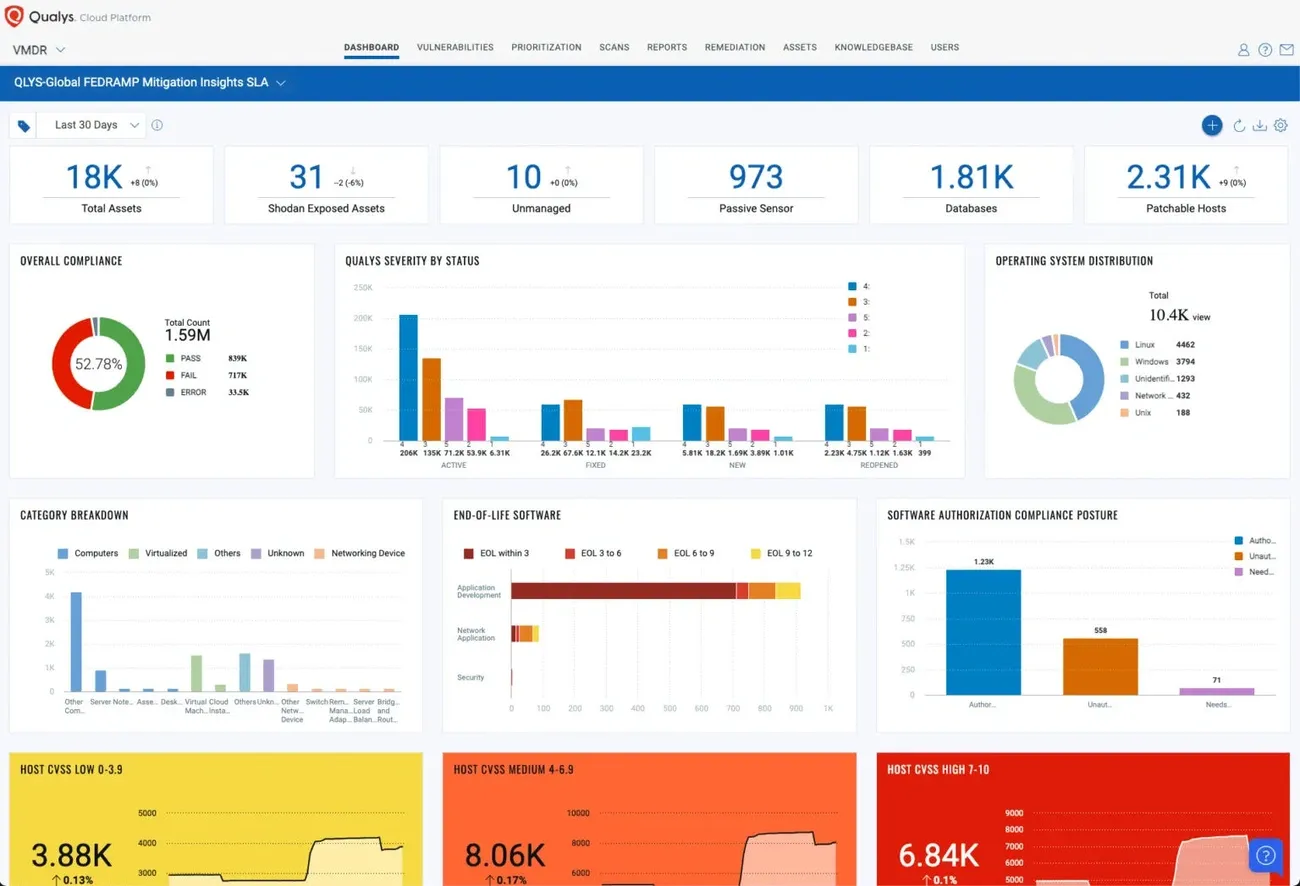
Image Source: Qualys Blog
FedRAMP cloud compliance needs rigorous monitoring whatever the deployment model. Cloud-only and hybrid architectures must follow strict security protocols to keep their Authorization to Operate (ATO).
Continuous Monitoring Requirements for FedRAMP
FedRAMP’s continuous monitoring (ConMon) follows the process described in NIST SP 800-137. It focuses on three main areas: operational visibility, managed change control, and incident response duties. Cloud service providers (CSPs) with multiple federal agency customers benefit from a collaborative ConMon approach. This helps optimize processes while letting each agency perform due diligence.
The program requires CSPs to show a mature security posture by implementing controls like system monitoring and event logging. We primarily deliver ConMon requirements monthly, annually, every three years, and as needed. These requirements stay consistent across both deployment models, though implementation is different.
CSPs must also identify and report Key Security Metrics, including:
- Unmitigated vulnerabilities broken down by risk rating
- Mitigated vulnerabilities with explanations of reduction measures
- Incident-related activities
- Most important change notifications
- Upcoming planned service milestones
Monthly Vulnerability Scans and Annual Pen Tests
Monthly compliance activities are the foundation of FedRAMP monitoring. CSPs must conduct vulnerability scans of operating systems, web applications, and databases. Moderate and high systems require authenticated scans with full system authorization.
CSPs must submit monthly reports with an updated inventory showing 100% scanning success, vulnerability scan results, and an updated Plan of Action and Milestones (POA&M). High-severity vulnerabilities need fixes within 30 days, moderate within 90 days, and low within 180 days.
Annual assessment requirements include an independent security assessment by a Third-Party Assessment Organization (3PAO). Moderate and high systems must undergo announced penetration testing as a critical risk validation step. This preemptive security posture builds trust with government customers and remains essential to maintain ATO.
Change Management in Hybrid vs Cloud-Only
FedRAMP defines three types of most important changes: Routine Recurring, Transformative, and Adaptive. The monitoring process for cloud-only architectures now evaluates the CSP’s overall change management processes rather than individual changes. This marks a shift from traditional models.
Cloud-only deployments usually benefit from optimized change management since all components fall within the same boundary. Hybrid deployments face extra complexity, especially when changes affect interconnections between on-premises and cloud components.
CSPs must conduct a security impact analysis before implementing any change to determine what it all means for the system’s security posture. Routine recurring changes don’t need approval. Transformative and adaptive changes need review by agency authorizing officials.
Best Practices for FedRAMP Cloud Compliance Strategy
Your FedRAMP cloud implementation success depends on good planning and expert partners. The right resources will make a big difference in getting your authorization.
Using FedRAMP Templates and PMO Resources
The FedRAMP Program Management Office (PMO) offers standard templates that make documentation easier. Your first task should focus on key documents like the System Security Plan (SSP). This plan needs enough detail for 3PAOs to create test plans. The FedRAMP PMO helps agencies and CSPs through the authorization process. They also keep a secure database of FedRAMP authorizations that others can use. They worked with NIST to create compatible standards like the Open Secure Control Assessment Language (OSCAL). These standards help automate security assessments.
Working with 3PAOs and Advisory Services
Third-Party Assessment Organizations (3PAOs) play two key roles in the FedRAMP system. They assess by creating Security Assessment Plans (SAPs), test security, and write Security Assessment Reports (SARs). They also give advice by checking for gaps and suggesting technical fixes. Before you talk to federal agencies, you should book a readiness call with a FedRAMP 3PAO. This helps you know if you’re ready.
Adopting a Continuous Compliance Mindset
FedRAMP 20x focuses on ongoing security checks rather than one-time compliance. You need:
- Tools that automatically watch for vulnerabilities
- Regular internal checks to see if controls work
- Teams dedicated to working with 3PAOs
Keep your documents current, including SSPs, vulnerability scans, and incident response records.
Conclusion
Your agency’s unique requirements, legacy systems, and security needs will determine the choice between FedRAMP cloud-only and hybrid deployment models. Cloud-only setups offer major advantages through streamlined security management, simpler documentation, and control inheritance from authorized providers. Hybrid models give organizations with large on-premises investments more flexibility, but they need careful security boundary management and Zero Trust principles.
You must maintain continuous compliance to keep your FedRAMP authorization, whatever model you choose. Monthly vulnerability scans, yearly penetration testing, and strict change management processes are the foundations of any successful FedRAMP strategy. Clear documentation and active security monitoring also help build a strong security posture that government stakeholders trust.
The FedRAMP Authorization Act has made this program the standard to assess federal cloud security. Service providers working with government data just need to comply. Organizations should utilize resources from the FedRAMP PMO and work with certified 3PAOs. Automated tools are a great way to get ongoing compliance support. You should book a readiness call with qualified advisors to assess your preparedness and find potential compliance gaps before you start your FedRAMP trip.
FedRAMP cloud adoption grows faster in the federal world, creating new opportunities and challenges. The certification process needs substantial resources, but its standardized approach creates a clear path to authorization. It also sets security measures that protect sensitive government information. Organizations that adopt these standards and pick the right deployment model will succeed in the federal marketplace.
Key Takeaways
Understanding the differences between FedRAMP cloud-only and hybrid deployment models is crucial for federal agencies and service providers navigating compliance requirements and optimizing their cloud strategy.
• Cloud-only deployments reduce costs by 20% and simplify compliance through unified security management, streamlined documentation, and inheritance of controls from FedRAMP-authorized providers.
• Hybrid models require Zero Trust Network Access (ZTNA) implementation to securely manage data flows between on-premises systems and FedRAMP cloud environments while maintaining separate authorization boundaries.
• Continuous monitoring is mandatory for both models, including monthly vulnerability scans, annual penetration testing, and real-time security assessments to maintain Authorization to Operate (ATO).
• Leverage FedRAMP PMO templates and certified 3PAO partnerships to streamline the authorization process and ensure proper documentation of System Security Plans and Security Assessment Reports.
• Adopt automated compliance tools and continuous security validation rather than point-in-time assessments to meet FedRAMP 20x requirements and maintain ongoing authorization status.
The FedRAMP Authorization Act has established this program as the definitive standard for federal cloud security, making proper deployment model selection and continuous compliance essential for success in the government marketplace.
FAQs
Q1. What are the key differences between FedRAMP cloud-only and hybrid deployment models? Cloud-only deployments offer unified security management and simplified compliance, while hybrid models combine on-premises systems with FedRAMP cloud capabilities, requiring more complex security measures like Zero Trust Network Access.
Q2. How does continuous monitoring work in FedRAMP cloud environments? FedRAMP requires ongoing monitoring for both cloud-only and hybrid deployments, including monthly vulnerability scans, annual penetration testing, and real-time security assessments to maintain Authorization to Operate (ATO).
Q3. What resources are available to help organizations achieve FedRAMP compliance? The FedRAMP Program Management Office (PMO) provides standardized templates, documentation guidance, and a secure repository of authorizations. Organizations can also work with certified Third-Party Assessment Organizations (3PAOs) for assessments and advisory services.
Q4. How does FedRAMP impact cloud security for federal agencies? FedRAMP establishes a standardized approach for assessing, authorizing, and continuously monitoring cloud products and services used by federal agencies, ensuring a high level of security for government data across all cloud deployment models.
Q5. What are some best practices for maintaining FedRAMP cloud compliance? Key practices include adopting automated monitoring tools, conducting regular internal audits, maintaining up-to-date documentation, and fostering a continuous compliance mindset. Organizations should also leverage FedRAMP templates and work closely with certified 3PAOs throughout the authorization process.