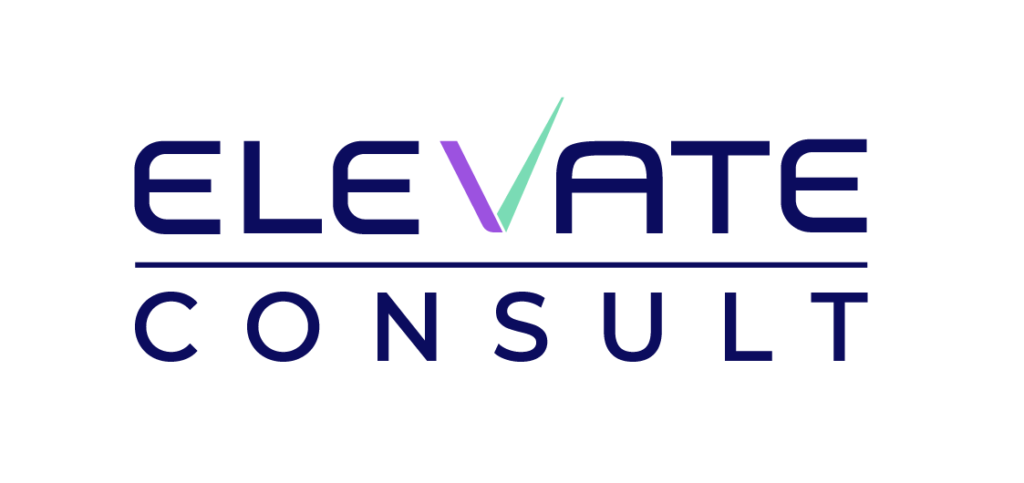
ISO 42001 Scope & Evidence Intake Kit
Define your AIMS scope, map controls to evidence, and surface readiness gaps fast. So, you know exactly what to fix before the audit.
Stop guessing what’s “in scope” for ISO 42001.
Map every AIMS clause to real artifacts. Not theory.
Identify gaps across AI lifecycle, data, third parties, and governance.
Built for audit reality: certification bodies look for scope clarity and evidence alignment.
ISO 42001 readiness breaks down at scope and evidence.
Most organizations don’t fail because they lack AI capability. They stall because:

The AIMS scope isn’t clearly defined (cloud, models, pipelines, teams).
Controls exist but aren’t mapped to evidence.
AI lifecycle processes are happening but not formally documented.
Leadership accountability and governance structures aren’t demonstrable.
This Intake Kit solves that bottleneck. It gives you a structured way to validate:
What’s in scope.
What control applies.
What artifact proves it.
A structured ISO 42001 control-to-evidence mapping worksheet.
The Intake Kit consolidates ISO/IEC 42001 clauses (4–10) and Annex A controls into one practical assessment table.
Each row includes:
- Control ID
- Control Area
- Audit question
- Expected artifacts
It’s built to help you quickly determine:
✔ What exists
✔ What’s missing
✔ What needs strengthening before certification

What’s Inside
The manual follows ISO 42001’s architecture:
Clauses 4–10 (AIMS Core Requirements)
Context of the Organization
Interested Parties
Scope of AIMS
AI Management System (AIMS) establishment
Leadership & AI Policy
Roles & Responsibilities (RACI)
AI Risk & Opportunity actions
AI Objectives & KPIs
Competence & Awareness
Documented Information control
Operational Planning & ML lifecycle
Monitoring & Measurement
Internal Audit
Management Review
Nonconformity & Corrective Action
Continual Improvement
Annex A (AI-specific operational controls)
AI lifecycle controls (design → deployment → retirement)
AI impact assessments (ethical, legal, societal)
Data governance & bias management
AI acceptable use & misuse detection
Third-party AI risk & contract controls
AI disclosures & communication controls
This mirrors exactly what auditors will assess during Stage 1 and Stage 2 certification.
The level of specificity inside
Examples from the Intake Kit include:
- Clear audit prompts like:
“Is the AIMS scope clearly defined including cloud platforms, AI models, data pipelines, and teams?”
- Artifact expectations such as:
AIMS manual, architecture diagrams, AI risk register, MLOps workflows, impact assessments, RACI matrices.
- Lifecycle verification questions:
Are controls applied at each AI lifecycle stage to address risk, security, and compliance?
This isn’t a high-level AI ethics checklist.
It’s a certification-aligned control verification matrix.

Use it as a pre-audit diagnostic tool
This Intake Kit is meant to be completed collaboratively across AI, security, and compliance stakeholders.

Implementation principles:
Start with scope clarity (Clause 4.3)
Validate leadership and governance alignment (Clause 5).
Map risks and lifecycle controls (Clause 6 + Annex A).
Verify monitoring, audits, and management review (Clause 9).
Identify corrective actions before the external audit (Clause 10).
Use it to surface readiness gaps early; not during certification.
Built for leaders accountable for AI governance outcomes
This resource is for you if you are:

A CTO, CISO, or AI Program Owner

Leading ISO/IEC 42001 certification efforts

Deploying AI systems in cloud or hybrid environments

Managing AI risk, data governance, and third-party AI providers
Preparing for EU AI Act alignment alongside ISO 42001
FAQs
What is ISO 42001?
ISO/IEC 42001 is the international standard for establishing, implementing, maintaining, and continually improving an AI Management System (AIMS).
What is an AI Management System (AIMS)?
An AIMS is a structured governance framework that manages AI risks, lifecycle controls, accountability, and compliance.
How do you define ISO 42001 scope?
Scope must clearly define which AI systems, cloud platforms, data pipelines, teams, and services fall under the AIMS. Ambiguous scope is one of the most common audit findings.
What evidence is required for ISO 42001?
Evidence typically includes an AIMS manual, AI risk register, impact assessments, lifecycle documentation, RACI matrices, audit reports, and management review minutes.
Is ISO 42001 only for large AI companies?
No. It applies to any organization that develops, deploys, or integrates AI systems; including those leveraging third-party AI services.
Can this help with EU AI Act alignment?
Yes. Many ISO 42001 controls overlap with governance, risk management, documentation, and transparency requirements expected under the EU AI Act.