ISO 27001
Why ISO 27001:2022?
Benefits of ISO 27001:2022 Certification
Achieving ISO 27001 certification offers significant advantages for your organization. One of the most immediate benefits is enabling your sales team to move faster through procurement processes. Because ISO 27001 is a globally recognized standard for information security, it satisfies a critical requirement in most vendor security questionnaires—helping reduce delays in the sales cycle and accelerating deal closures. Beyond sales, ISO 27001 strengthens your organization’s risk posture by implementing a systematic approach to managing sensitive information.
Enhanced information security posture
Improved risk management
Increased customer trust and confidence
Competitive advantage in the marketplace
Compliance with regulatory requirements
Changes to the 2022 Version:
Reduced the number of controls from 114 to 93
Restructured controls into four main categories
11 new controls added to address emerging security challenges
Organization Controls
37 CONTROLS
- Policies
- Roles & Responsibilities
- Access Rights
- Information Labeling
People Controls
8 CONTROLS
- Terms & Condition of Employment
- Security Training
- Remote Work
- Disciplinary Process
Physical Controls
14 CONTROLS
- Physical Security Perimeters
- Physical Entry
- Cabling Security
- Equipment Maintenance
Technological Controls
34 CONTROLS
- User Endpoint Devices
- Configuration Management
- Data Masking
- Data Leakage Prevention
2022 Readiness Assessment Process

We meet with key stakeholders to understand your organization’s current security posture and objectives.
We create a Document Request List with the evidence necessary to evaluate your environment against ISO 27001:2022 requirements.

Our experts conduct a thorough review of your existing ISMS against ISO 27001:2022 requirements.

We assess the implementation and effectiveness of controls across all four categories based on the information collected from the interviews with stakeholders and the evidence collected.

We help you identify and evaluate information security risks in your organization.
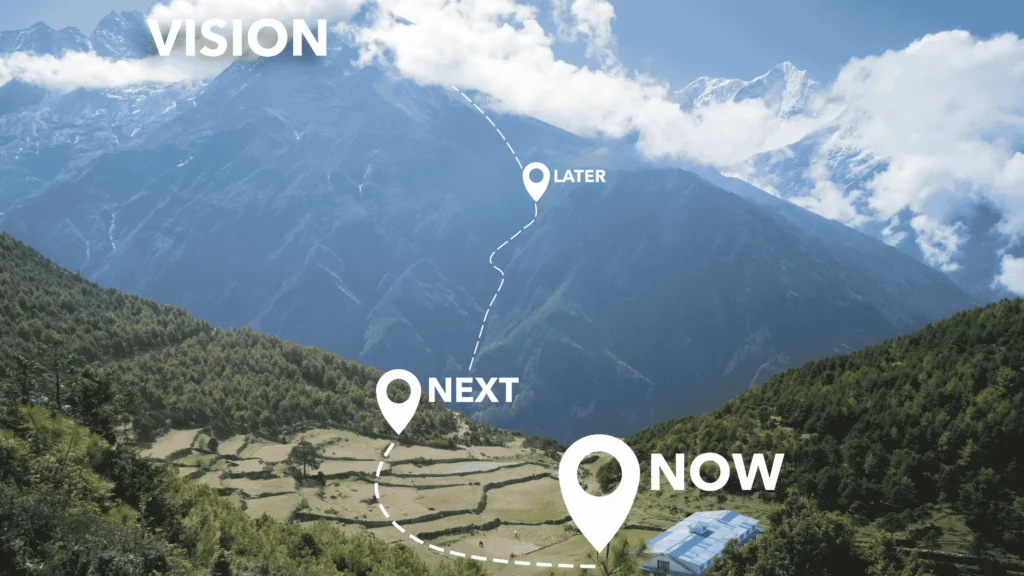
We provide a detailed report outlining our findings, recommendations, and observations for each control objective in scope.

We work with you to create a prioritized action plan to address any gaps or areas for improvement.
2022 Readiness Assessment Process
We meet with key stakeholders to understand your organization’s current security posture and objectives.
We create a Document Request List with the evidence necessary to evaluate your environment against ISO 27001:2022 requirements.
Our experts conduct a thorough review of your existing ISMS against ISO 27001:2022 requirements.
We assess the implementation and effectiveness of controls across all four categories based on the information collected from the interviews with stakeholders and the evidence collected.
We help you identify and evaluate information security risks in your organization.
We provide a detailed report outlining our findings, recommendations, and observations for each control objective in scope.
We work with you to create a prioritized action plan to address any gaps or areas for improvement.
Why Choose Our ISO 27001:2022 Consulting Services?
Our CaaS modules are designed to provide you with a customized combination of ISO compliance services, at the right level of service, to meet your specific needs and maximize your investment.

ISO 27001 Risk Module:
- ISMS Standards Implementation.
- ISMS Control Scope Definition.
- ISMS Internal Audit + Annex A Controls.
- Security Impact and Objectives Analysis.
- External Vulnerability Scans.
- Internal Vulnerability Scans.
- Penetration Testing.
- Corrective Action Plan (CAP).
ISO 27001 Incident Module:
- Table-Top for Disaster Recovery Plan.
- Table-Top for Business Continuity Planning.
- Table-Top for Cyber Incident Response Plan.
ISO 27001 Training Module:
- KnowBe4 Training Licenses and Maintenance.
- Phishing Campaigns.
ISO 27001 Governance Module:
- ISMS Documentation Management Policy
- Creation and Maintenance
- ISMS Statement of Applicability (SoA)
- ISMS Charter Creation and Committee Structure
- ISMS Manual Creation and Maintenance.
ISO 27001 Reporting Module:
- Information Security Objectives and Metrics
- ISO 27001 Information Security Assessment Report
- Consolidated List of Findings
Our customized service and modular approach demystify and simplify your ISO 27001 compliance certification process. Working with our team of security and IT compliance control experts not only reduces your certification readiness process but also enhances your security posture and confidence presented to your customers.
Let us guide you through the ISO 27001:2022 certification process, ensuring your information security management system is robust, compliant, and effective. Contact us today to start your journey towards enhanced information security and ISO 27001:2022 certification.
FAQ
What is ISO 27001?
ISO/IEC 27001 is the globally recognized standard for establishing, implementing, maintaining, and continually improving an information security management system (ISMS). It defines requirements that apply to organizations of any size or sector.
What is an Information Security Management System (ISMS)?
An ISMS is a risk-based system of policies, processes, people, and technology to protect the confidentiality, integrity, and availability of information across the organization.
What are the requirements to become ISO 27001 certified?
You must implement the ISO 27001 requirements (clauses 4–10), perform risk assessment and treatment, and maintain evidence of controls (Annex A lists 93 control topics in the 2022 edition). Certification is granted after an accredited auditor completes Stage 1 and Stage 2 audits.
What is the roadmap to become ISO 27001 certified?
A practical path is: scope your ISMS, perform a gap analysis, assess risks, implement and evidence controls, run internal audit and management review, fix nonconformities, then complete Stage 1 (documentation) and Stage 2 (implementation) certification audits. Typical end-to-end timelines range ~3–12 months depending on size and readiness.
How do you become ISO 27001 certified?
Define scope and policies → conduct risk assessment and select risk treatments → implement Annex A controls with a Statement of Applicability → run internal audit and management review → select a certification body → pass Stage 1 and Stage 2 audits to receive the certificate.
How do you conduct an ISO 27001 Internal Audit?
Plan the audit and scope → review documents/evidence (including the Statement of Applicability) → test control operation → record nonconformities and opportunities for improvement → issue the report for corrective actions before certification.
How do you conduct an ISO 27001 Risk Assessment?
Identify information assets and threats → evaluate risks using defined criteria → select and justify treatments → map to Annex A controls → document results and the risk treatment plan; repeat periodically and on significant change.
How do you scope an ISO 27001 audit/ISMS?
Set boundaries and applicability per clauses 4.1–4.3: define organizational context, interested parties, locations, systems, processes, and interfaces. The scope must be clear, risk-aligned, and updateable as the business changes.
Why is ISO 27001 one of the preferred IT audits for cybersecurity?
It’s an internationally accepted, auditable framework that demonstrates due diligence, builds customer and regulator trust, and aligns security practice with business risk—often required or favored in procurement and partner assessments
Is ISO 27001 hard or easy to obtain?
Difficulty depends on scope, existing maturity, and resources. Many organizations complete certification within roughly 3–12 months; smaller, well-prepared teams can be faster, while larger/complex environments take longer.
What is the overlap between ISO 27001 and ISO 42001?
Both are management-system standards that use risk management, documented controls/processes, monitoring, and continual improvement. ISO 27001 focuses on information security risk; ISO 42001 focuses on AI systems and responsible AI governance. Organizations can integrate them so security and AI governance share governance, risk, and evidence workflows.
What changed in ISO 27001:2022 vs 2013?
ISO 27001:2022 refreshes clauses 4–10 for clearer risk-based management and aligns Annex A to the updated ISO 27002:2022, reducing the control set from 114 to 93 themes and modernizing coverage (e.g., cloud use, threat intelligence, configuration/monitoring). Organizations must update their SoA, risk treatment, and evidence to the new structure; most handle this via a short gap assessment, targeted control updates, and a documented transition plan.
What is a Statement of Applicability (SoA)?
The SoA is the master list of Annex A controls your organization adopts or excludes, with justifications and implementation status. It maps risks to controls and points auditors to the exact evidence owners. Keep it current, signed, and consistent with your risk register and policies.
What is the difference between Stage 1 and Stage 2 audits?
Stage 1 is a readiness and documentation review: scope, policies, risk method, risk register, and Statement of Applicability. Stage 2 tests real-world effectiveness: interviews, sampling of controls, and evidence over time. Pass Stage 2 to receive the ISO 27001 certificate; expect annual surveillance audits afterward.